Latest Posts

Showing posts with label art. Show all posts
Today I am so excited to introduce you to Helene Ruiz, an acrylic painter based in the United States. At the age of 57, she is not certain the exact moment she began to use her medium of choice - acrylic paints. She does recall this story tracing back to her childhood:

"My father always taught me to think creatively and he himself was an artist. When I was a kid and wanted colors I extracted colors from comic strips, nature, coffee, teas, etc. My first painting kit was not actually purchased until I was about 11 years old when my father took me to Pearl Paint in Chinatown, Manhattan and bought me watercolors and brushes, of which I still have some of the brushes for memory's sake. I played with them until I discovered oil paint, which I found each time I used it - I would get sick.  Apparently I am allergic to them. So then, when I used acrylic for the first time, I fell in love with them. They were perfect for me! The fact that I paint a lot and live in a small space makes acrylic a perfect match for someone like myself, since they dry so fast." 

Acrylic painting on black background with two clowns dancing around sad face balloon with heart hanging in center
Send in the Clowns, © Helene Ruiz

Jester or fool garbed sleeping or dead character reposed in yellow bathtub with heart outside of chest on black background
Expired Fool, © Helene Ruiz


Helene is working on a collaborative project with artists all over the world, that I find so very fascinating. This interview will delve into that in detail since it is an event taking place Now.  If you are an artist who wants to participate, find out how by reading on. First, let's get to know Helene Ruiz, the artist, a little better - she assures me there is an entire book's worth of uncharted stories within her...

Would you tell us about your most memorable artworks? 

I have used so many materials... it is actually difficult to say which would be my most memorable pieces. I suppose those are the ones I do to try and show what is unseen. I try to express my take on life and how I perceive life's take on others as well. Anything can trigger me... environment, politics, love, pain, illness, etc

What has been the most unexpected thing that has happened in relation to your creating art? 

Funny, I find this question here, especially now at the end of April 2015. Because just about a month ago, on March 28th, I almost lost my life and was rushed into emergency surgery. I am still recovering and doctors say it could be six months before I actually do recover fully. I have another surgery to go through in June to put me back together again so I can feel human. So, this experience, right now, is the most challenging of all life's events thus far!  Only today have I attempted to begin to sketch out a painting... it will not be easy. I will be forced to do it in small steps, but it will be the first since March 28th. For me, I usually do at least two or more pieces per month, so this has been a long spell of not creating art for me. 

[GFDL or CC BY-SA 3.0] via Wikimedia Commons


The aim of these five tips is to help you talk about your artworks, and sell them. Artists anxious in regards to speaking about their art should definitely pay heed to these ideas presented in this article. Many artists find it is not easy to discuss the meanings and themes within their artworks due to the personal nature of the artistic process. However, it is the artist’s own story that is most compelling and intriguing when it comes to their own art. So, in order properly promote you own artworks it is imperative to keep in mind that buyers wish to understand the art they add to their collections.

  1. If you hope to effectively speak about your art, first write down what your art is about. The exercise of writing forces one to articulate what goes on in your creative minds. Include whatever is important to you processes. If you feel that your story must tell how you came to work in your current medium, what your primary techniques are, who influenced your work, if you use themes, what your art education is, or who has taught you methods and skills that you use now then include these things and anything else that comes to mind when thinking of your art.  Putting this information down on paper will help you find what points you wish to emphasize in telling the story behind your work.
Online art galleries are very important modern tools for artists in addition to traditional offline art displays. Uploading art images to online art galleries is a prime opportunity for otherwise little-known artists to establish a presence on the internet. Before the internet came to be widely used as it is today, art viewing and purchasing was limited to local showings of an artist's work with some exhibitions that would travel city-to-city. Aside from the in-person method, artists also have long used catalogs that show works from various artists made available to the general public. These methods are still good practice and getting out and taking your work to shows is always a positive, yet, the artists are limited in the number of people they can reach and the length of time their art display will circulate. A very important point to consider is that when using offline methods much of the control shifts into the hands of curators and gallery owners and the entire process therein is subject to be approved or rejected by them. 


Example: A Singular Creation Member Galleries

Texas Quilt La Grange Mural Art courtyard
Mural on the outer wall at the Texas Quilt Museum
After a recent visit to a local quilt museum, I feel an enhanced awareness of the artistic work of quilters even though I had already known it to be an art form. Quilting experienced developments boosting the skill to a fine art as recently as the 1970’s and 80’s. Today there are active collectors of quilts old and new.  

The place I visited, currently the only quilt museum in the American Southwest, was the Texas Quilt Museum. I am not able to share pictures from the exhibit as photography is not allowed inside, but there is a lovely courtyard with a mural of quilts that I did capture a photo of in the main image here. They house a selection of antique, historical quilts in one area; however, the main halls showcase a themed exhibition much as you would expect to see at an art gallery. From the start of my tour I saw modern works with subject matter not typical to what I had seen in quilts before, such as savanna animals depicted in unusual hues of pink and works with photography and mosaic elements included. The proper lighting and orderly fashion of the general presentation relayed how seriously this art is taken. As my group explored the displayed works it quickly became apparent to us that modern quilters are using a wide array of materials beyond fabric alone.

Author: Rafal Maleszyk Fine Art Photos  
satchel, portfolio


It takes a lot of determination and persistence before you can call yourself a fine art photographer. Like every passion and profession this one is no different. It is a very unique hobby, hard to define, measure or describe. Success in art always has been hard to define, it is something you cannot measure in money or quantity and quality is hard to define too. Here are some things you will have to do before you will be recognized as fine art photographer...

1. Build a strong portfolio that is original and artistic. 
You will need to take art or photography courses and decide what it is that you like the most. When you find it that will be the first great step, sometimes hardest to achieve. After you decide what gives you the most satisfaction, you will start creating strong work. Some people are fortunate enough and do not need schools, they acquire their knowledge by experimenting, reading and analyzing. 

2. Submit your photos to contests, fellowships, awards and grants.
There are thousands of places where you can submit your work online. Prepare carefully, read the rules and understand what the judges are looking for. Your work can be exceptional but remember, you have to submit only the pieces that follow the guidelines. The biggest mistake you can make is to submit work that does not fit the topic of the contest.

3. Find fine art magazines and journals.
Editors are looking for great work everyday, yours can be the one that they have been waiting for. Find magazines that feature work that is in the same genre of your work. It will take hundreds of magazine submissions before you will be accepted but trust me, the first publication will feel great. It will be easier to find magazines that are available online only, those places are not limited by the number of pages, the cost of print is zero so they can include 100 pages or 200 pages without raising the cost of production, as long as your work is strong and original you have a high chance.
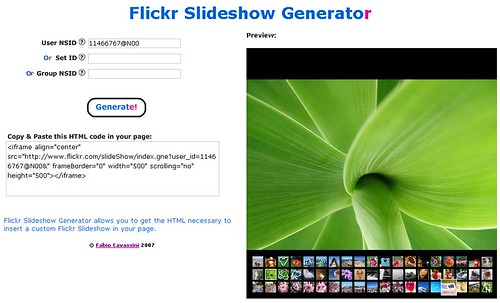
Flickr Slideshow Generator
Example of a digital Fine Art Photography Portfolio online.


4. What is a strong portfolio?
Your portfolio will be a collection of your photographs that have something in common. If you have many strong images that show very different topics, divide your portfolio into series of photographs. This kind of portfolio with a common topic is strong are highly appreciated because it can make a bigger impact on a viewer and is much more difficult to create.
Faukner Jan portfolio 2010-00009
Images with a common theme
 make a stronger impact.

5. Find an art gallery.
When you complete the above you are ready to show your work in art gallery, select carefully, do not be desperate, art gallery managers take advantage of artists all the time. There are no clear laws protecting the artist, as a matter of fact there are no laws at all. Art galleries have been in business for long time and if you are new to it, they will feel it. Do not be desperate, if you do not feel 100% confident that your work will be properly represented do not come into agreement with the gallery just for the reason to have your work shown. There are better places where you can expose your work. Always sign a contract.

6. Submit your work to museums.
This is one of the highest rewards you will find at this point, when your work is shown at a museum or included in the permanent exposition. This will raise the prestige of your work and help build your carrier.

About the Author
Rafal Maleszyk is a fine art specialist, his work has been awarded and published in numerous magazines; Silvershotz, LensWork, Camera Obscura, Black & White Magazine. 

Article Source

Today I am pleased to introduce to you artist Hemu Aggarwal, Currently at Puerto Plata, Dominican Republic, with mailing address in San Francisco, California, USA. She creates paintings in acrylic on wood that are in the styles of Abstract or Subjective Expressionism. Hemu began creating art at the age of 15 when she met an art teacher in a new school. Here is how she summarizes her artistic journey:
What do you do once you make a painful decision to end your successful career in a busy place like New York and move away to a quiet island in the Caribbean? You paint.

By education, training, and profession I am a graphic designer Having a Master's degree from New York University and working as creative designer on Madison Avenue for 7 years and then running my own creative design firm for over 25 years, now, retired and live in the Dominican Republic and has started to paint after a time gap of 35 years. Yes, I did designing and illustrative work during my business, but that was totally different in nature. Working under pressure of tight deadlines, the focus was to please clients and to keep commercial appeal in mind. Now it is different. To get a glimpse of my work visit my website.

After running a successful creative design firm in New York, USA, I am now retired and spend as much time possible doing Acrylic paintings, traveling and capturing images around this world. I wish I could lock-up every image I see through my eyes because I feel my glance is not fully capturing what I see. There is so much beauty in this world. 

What things inspire you to create art?
abstract colorful painting on wood of a dancing couple THE DANCING PAIR,  Copyright Hemu Aggarwal, 2014
THE DANCING PAIR,
 Copyright Hemu Aggarwal, 2014

It’s hard to explain why I paint or what inspires me. I have a thousand ideas in my head and I am constantly experimenting with different subjects, styles and techniques. I do not know how these ideas come from or from where, they just do. There is so much more out there in the world that I long to explore. Actually, anything and everything around me inspire me and sometimes things that are not around but only appear in my dreams. Sometimes I surprise myself when I am able to transfer these imaginations two-dimensionally.

What are you trying to convey through your art? 

Beauty is in the eyes of the beholder.   I seek to evoke a positive response in the viewer. The painting should be pleasant to see and should leave a mark in the viewer’s mind. It should be uplifting. It helps me to reduce stress.

Are there other artists who influence you?

I admire many artists but no particular artist or work influences me, at least not consciously.

Tell me about your creative process, from the beginning of a work to its completion:

An answer to this question is a difficult one. Each of my works have gone through different processes. In general, however, a concept comes to my mind and I try to apply this image straight to a prepared wood panel (I have rarely used canvas) where I create various textures using all kinds of tools and instruments. I rarely draw a full image, but prefer to work with colors directly. Many times more than one image overlaps and the final result is very different than the initial idea in my mind-this surprises me and if I like it I am happy with it, otherwise I apply gesso all over and start afresh. Some of my paintings have one or more different paintings underneath. Aesthetics are a major consideration in designing each piece. The focus is to create paintings, which have visual beauty, harmony in colors and interesting composition.

What exposure have you had? 

My work has been displayed at: Worldorf Astoria in New York, N.Y.; The Exposure Award at The Louvre Museum in Paris France; The People’s Choice Vox Populi Award in Paris, France; and Costambar, Puerto Plata in the Dominican Republic. In process of granting an international license to print one of my photographs on their products to a company in Belgium.

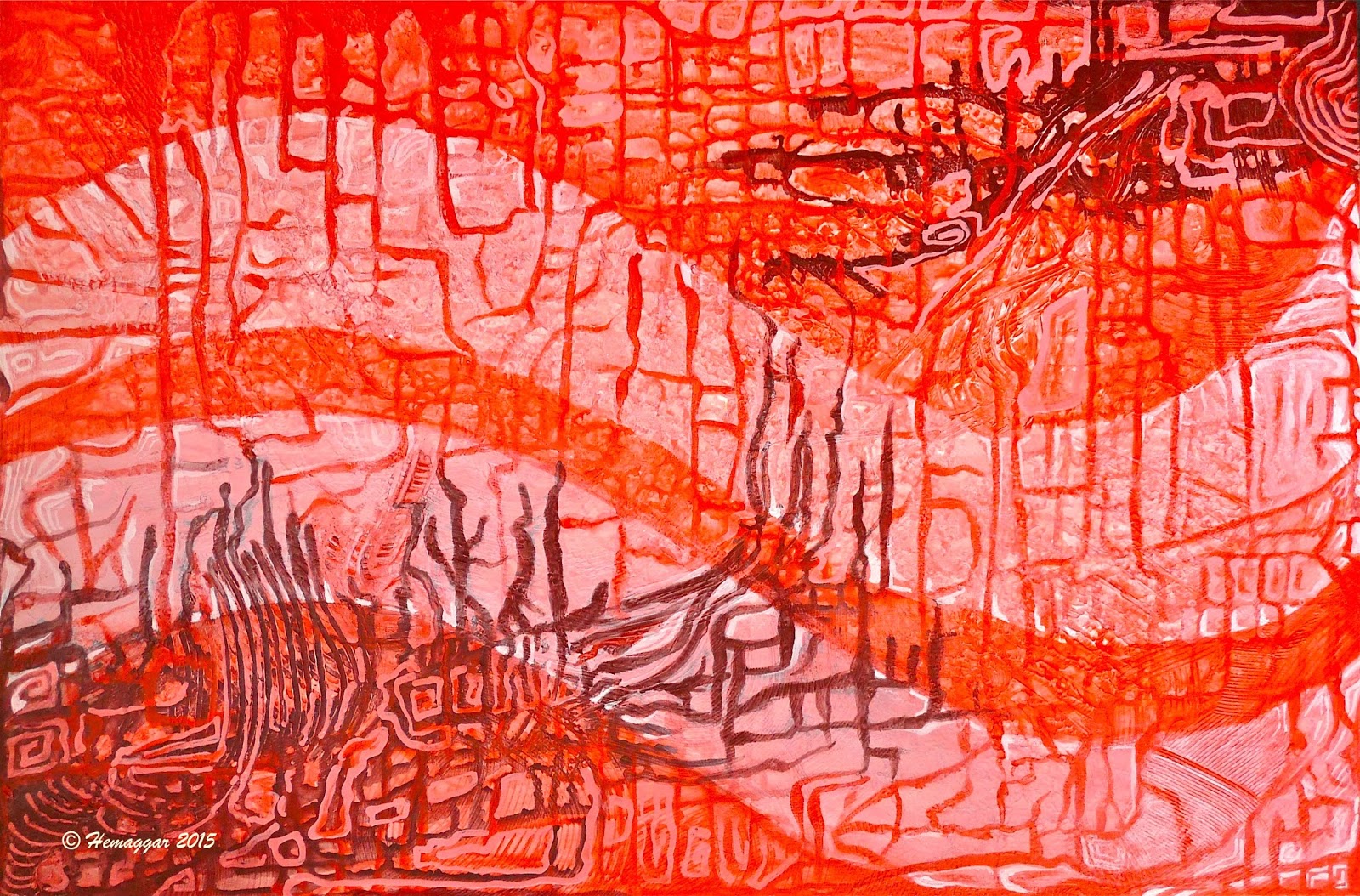
Abstract painting with wave like lines varying red paints SIXTY SHADES OF RED,  Copyright Hemu Aggarwal, 2015
SIXTY SHADES OF RED,  Copyright Hemu Aggarwal, 2015


What is the most unexpected thing that has happened to you because of your art?

By sheer luck, in 1969 I got a job in New York City with a design firm specializing in record album
designs where I reached the level of senior designer and got the opportunity to design many albums of well known artists like: Tom Jones, Montovani, Englebert Humpernickel, Brotherhood of Man, Frijid Pink, one of the last albums of the Beatles, and a single by John Lennon and Yoko Ono titled ‘Radha Krishna Temple.’ This experience enabled me to start my own company, AQ Graphics Inc. in New York, and I continued in this line of work. I designed many Hip-Hop albums including Grandmaster Flash and Furious Five’s “Message” album, The Sugar Hill Gang, Positive Force, Treacherous Three, Quincy Jones and many others. I also designed a series of Collector’s records of the 50s and 60s in which a few famous artists such as Dionne Warwick, Ritchie Valance, Dion, Del Shannon, and the Everly Brothers were included. I also worked extensively on re-make of the entire Chess Records Catalog which included artists such as:  James Brown, Aretha Franklin, Chuck Berry, Benny Goodman, Bo Diddley, Muddy Waters, Howlin’ Wolf, Buddy Guy, The O’Jays, Etta James, Charlie Parker, Flamingos, Bobby Womack,  etc.

Grey subjective abstract painting on wood SIXTY SHADES OF GREY,  Copyright Hemu Aggarwal, 2015
SIXTY SHADES OF GREY,  Copyright Hemu Aggarwal, 2015

Do you have any regrets in your life as an artist? 

None what-so-ever.

What plans do you have for the future of your art? 

None really, I just want to continue creating new work.

Do you have any advice for artists who are just getting started? 

Do what your heart desires. Be patient. Create fearlessly because fear is one’s worst enemy.

abstract painting acrylic on wood THE GIRL, Copyright Hemu Aggarwal, 1975
THE GIRL,
 Copyright Hemu Aggarwal, 1975
Share a story from your life that relates to your art.

I was born and grew up in India. Back in the days, higher education in India was looked upon as a ticket to a financially successful future that was important for sons but not for daughters. So boys were expected to go to a school of medicine, engineering, or law. If by any chance my brother had decided to graduate in art, I am sure my parents would have been very upset but were happy with my choice. My interest in the arts was fully supported, encouraged and appreciated by my family. But art was not considered to be a career path and my obsession with art was seen as a hobby – a situation that happily gave me a free hand to do whatever I pleased without interference from the elders.
           
Luckily, I got an admission into one of the finest art schools of the region, Faculty of Fine Arts at M.S. University of Baroda. But my being female, I had an up-hill battle to sign up for commercial (applied) arts department as girls were not expected to go in commercial line.

Along with applied arts I developed liking for photography and early on I started experimenting with many different aspects of it. I shot wide variety of subjects, experimenting with different lenses, with lights and exposures. I spent hours in darkroom perfecting making prints and creating photograms. My work was included in the national exhibition in India and received honorable mention (no prize!).
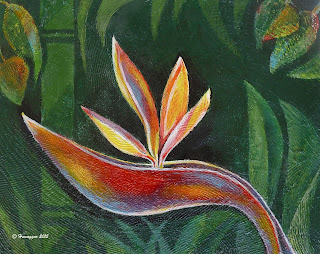
lotus blossom painting acrylic wood BIRD OF PARADISE IN PARADISE,  Copyright Hemu Aggarwal, 2015
BIRD OF PARADISE IN PARADISE,  Copyright Hemu Aggarwal, 2015

Is there anything else you would like to share with us? 

Recently I have started to study my new passion which is to create art aligned with Vastu Shastra/Feng Shui: an ancient science with tradition dating back 5000 years (India) and Feng Shui 3000 years (China), Feng means wind and Shui means water. The ancient philosophers knew a lot about the five elements that made the universe. These five elements are: Earth, Water, Fire, Air (wind), and Space. There is an invisible relation between these five elements.

Understanding these five natural sources and coordinating with them in harmony can certainly attract positive energy and assure better health. I am convinced that anything we see around us affects our thinking and how we feel.

How should people find you online….
Profile image of artist Hemu Aggarwal


Websites:


Twitter: @hemuaggarwal

Facebook: https://www.facebook.com/hemu.aggarwal

Google+: Hemu Ghia-Aggarwal

Email: hyaggarwal@gmail.com


Miss Anchor, watercolor, painting, stephanie ayers
Miss Anchor © Stephanie Ayers
Click here to purchase as print
Since introducing Stephanie Ayers and her art back on March 28, 2013 in what was my very first artist interview, she has continued to build her art portfolio and learn new things. Recently we were catching up and realized it would be a great idea to share what is new since then in another interview session.  She is about to have another exhibition which will be at RAWartists Austin presents: ENCOMPASS  and in the midst of getting ready for the show that is less than a month away she has taken a few moments to answer some inquiries about her life as an artist at this point in time. 


artist, painting, painting for you, watercolor, stephanie ayers
Stephanie Ayers, Marvel show
 @ The Belmont, Austin, Texas


What is the most exciting artistic breakthrough you have had in the past six months since your first interview?

Artistically I have come to terms with acrylics and I'm really having a great time. I asked other artists I've met in the last six months and did a little research. Amazing how easy acrylics can be.   


Would you care to talk about your first show at The Belmont?  

My first show was a whirl wind of nerves for me. I wanted everything to be perfect. It was total chaos up to the moment the doors were open.   


  Bollywood Cat Dia de los Muertos 
© Stephanie Ayers
Click here to purchase as print

What was your favorite thing about getting out and doing the show?

I have to say my favorite thing about the entire event was all the people I met. I bartered with other artists, I got amazing advice and met some life-long friends. The exposure got my name out there and forced me to make every mistake possible from the "business" perspective. Now I'm more calm, more prepared, and have a better understanding of exhibits.  


I have noticed some art print photography available on your Society6 page, tell me about how you got into that.

Society6 gives me the opportunity to advertise some of my art and photography as well as sell it without all the hassle. They have everything from prints to frames to canvas and it's only a click away.  I choose the price and commission. Society6 allows me to focus on new art and it's an easy way for someone to order prints without waiting for me to get them made, package and mail them...etc. And it's affordable.  


© Stephanie Ayers, whale, red sky, ship
Red Whale © Stephanie Ayers

What new art should we expect to see from you?

Currently I'm working on all Dia de los Muertos for my exhibit Oct 17th at The Belmont. This will be my "theme" at this showcase. I'm working with some actual skulls (paper) and acrylics. I'm doing some smaller scale things to keep it simple and affordable. 


Read more about Stephanie Ayers in this in-depth interview from earlier this year.


sugar skulls, mexican folk art, artist, stephanie ayers

There are some that think that if they just had the talent to be a great artist then they would automatically become rich overnight.  Apparently these folks have never heard the term “starving artist” or really taken a good look at the tragic and destitute lives of some of the most posthumously renowned and treasured artists in history.  It is difficult to understand how on earth a financially impoverished artist could even afford materials to create their art.  Artists with wage-earning jobs only creating their work part-time often end up putting what money they receive from sales back into sustaining their ability to continue their art projects.  That is at least a self-sustaining scenario and the art is still being created and enriching the world – if not the artist.  The point I am taking to task here is that financial security does not kick in automatically just from producing art.

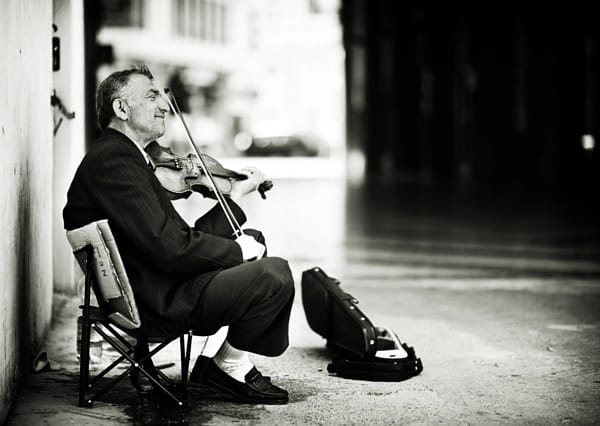
Arte en todas partes by Manuel Orero on 500px.com
The music is first, the busking is secondary.
Arte en todas partes by Manuel Orero

As a part-time artist, writer, or musician with a full-time job there is the ability to pursue creative endeavors supported by the additional steady income. However, there is also a hugely negative factor within this arrangement. The time and energy put into earning income from a regular job not only detracts from someone’s creative efforts, it effectively stifles them.  Further damaging their artistic careers by having limited availability makes it difficult to attend a show or to set appointments with prospective clients.  Not having the flexibility of having an open schedule takes away any ability to compete with a full-time creative colleague. 


Many artists do not have time for marketing and promoting their work and may not even have found a particular niche that their work fits in.  This is a classic example of the creative mindset removed from one of business-oriented concepts and practices.  After all, when you have art to do, it is hard find time for other things – especially something as banal as business.  However it is a matter of one thing depending on the other for any creative who is serious about producing on a professional level.  Many do nurture the skills needed to help promote their presence in the community.  It is something that will take a lot of patience, as time and relationship-building are important in addition to learning marketing skills.  When necessary, and if they are able to afford to do so, artists will find agents who can work for them to aid in the business side of things.  These can be event coordinators, gallery or shop owners, webpage designers, SEO builders – the list goes on.  For the most part, if a means of promotion exists then there are those whose services can be hired to do it.  This is the investing in oneself portion, beyond materials and tools, which also highlights the point that making art is not about the money.  


Exhibition at The Avenue - London by Ben Heine on 500px.com
An exhibition promotes an artist, and the artist presenting must invest in their event.
Exhibition at The Avenue - London by Ben Heine

The money is a necessary element to keep the artwork producible and to bring it to the masses, but it is not where the art comes from.  In the business frame of mind profit is the ideal result – however ideals are subjective. 

The ultimate goal most people who create art tell me about is this: the feeling of having made something that touched someone.  Whether it made them change their perspective or simply reminds them of something that they care deeply for, being able to see another person have a connection to the painting, book, photo, song, drawing, etc.  -it is what being an artist is about.  If your work can produce such an emotional impression on another person, there is no actual dollar value you can put on that.  It is the appreciation element, that intangible but incredibly rewarding moment when understanding or empathy occurs as a reaction to an artwork. 

In a previous article I wrote about the Value of Art.  In effect, here I am also expanding upon that theme.  I wanted to write more to really emphasize that artists are not at all about what some perceive –greedy or money-driven. Artists make art simply because they CAN.  Some say it is a part of their nature and a compulsion towards creativity will keep them making art even if no one is looking at it, much less if they are making monetary profit.  The rarity and the status of collectible art and the inflated value of popular artists is not the rule.

Independently, being an artist is not all about the money; and even if your work ends up on the high end price range, there is no guarantee it will happen while you are still around to notice.  There are those who feed the notion that being an artist is all big money making and that is what is seen often in Hollywood or in Art Museums.  If you are doing what you love and you get to enjoy doing so, that is the first gift of making art.  The second is having recognition and connection with other people.  When someone pays an artist it is often just barely compensating for what went into the actual creation of the work, yet it is nudging them on and saying “Please continue.”  


© Rebecca H Knight, images are © their respective owners. All rights reserved
oil painter, dan fusco
Dan Fusco
Dan Fusco of Long Island , NY is here to share some insight  with us about his experience as a painter of people. With twelve years of painting, Fusco has developed a style he calls a "realism/impressionism blend."  It is in this style that he renders beautiful oil paintings and brings forth the personalities in his portrait subjects. Even though he does some landscapes and cityscapes, he tells me right upfront that he finds "human beings the most interesting thing in the universe."

Tell me about your first experience painting with oil on canvas:

I took an oil painting class to improve my color choices for my woodwork. Well, I fell in love with painting and have been at it ever since. I have worked with other mediums but prefer oils. Now and again I do a landscape, cityscape, or a still-life but portraits remain my favorite.

lady in blue holding a freshly baked pie
Our Lady of Pies © Dan Fusco
What in particular draws you to paint human subjects?

Of all living things I'm drawn to painting people because of their complexity and the range of their personalities and behaviors as a group or within a single person.You spend many hours looking at and thinking about the person and in some ways get closer to them. Paradoxically, it is also a way to deal with people at arm's length.

As a young man I did a lot of traveling through out the West: California, Oregon, Nevada, Idaho, and Arizona as a door to door encyclopedia salesman. I didn't like the selling so much but the talking to thousands of people from all walks of life was very interesting. I would often end up for hours in conversation about every subject under the sun. After hearing so many stories I guess I'd like to make some kind of record, something that will keep peoples' stories alive.


older gentleman in tropical setting with palm trees swaying in the wind
Nick Fusco © Dan Fusco
What are you trying to convey through your art? What does it mean to you?

I'm a guy with an inclination to combine oil paint with composition on canvas. I want my painting to present the subject/person to the viewer in a way that will make them wonder who that person was/is and what are they like. It's a way of keeping that person in the land of the living for as long as people look at the portrait.

Tell me a little about your creative process:

First comes the idea, something about a person, attitude, atmosphere, expression catches my attention. It is that thing that caught my attention that I want to get on the canvas.


Smiling lady with her pet tabby cat in her arms.
Marsha Annie © Dan Fusco

What exposure have you had, and what plans do you have for your art?

I exhibit in local art shows and fairs here on Long Island winning several awards. I also exhibit with the SEVEN & SEVEN group of painters and sculptors. We will be exhibiting at the C.W. POST, Hutchins Gallery this October.

How have people reacted to your art?

Some people like the art some are indifferent. I don't really have a way I expect people to react no ones thrown any rotten eggs yet.

Do you have any regrets in your life as an artist?

My one regret is I didn't start painting when I was ten-years-old. As there is no shortage of subjects I intend to be painting for a long time.


Small girl with shy smile on her face.
Avery © Dan Fusco


Do you have any advice for emerging artists?

If a new artist were to ask for my advice I would tell them it's better to paint 20 small paintings quickly than labor and doodle over one.

How do you promote your art both on and off the internet?

I'm sure an unbiased onlooker would say my self promotion skills are poor but I make occasional attempts such as this interview. I am starting to advertise in some local papers along with art shows and fairs. 


Red haired young lady posed with hand on hip in front of mountain scenery.
Napa Valley Lysa © Dan Fusco


Where may my readers see more of your art and get in touch with you?

I can be seen at danfusco.com also try the sevenandseven.org site. I have pages of paintings on several art forum sites such as A Singular Creation, Fine Art America, Artist to Artist, Deviant Art and Wet Canvas.


© IOUart, Creative Highlight, all images © Dan Fusco


Photograph of several blueberries lined up.
The Value of a Dollar, © Jonathan Blaustein, Courtesy: New Mexico Arts
How do you sort out what is the value of any piece of original art and what comparisons should be taken into consideration. The value of art is a matter that has many variables to consider. If art is measured in terms of money only then no price could be low enough for a buyer.  Since it is indeed a commodity item from the artist’s point of view, prices must be determined for reimbursement. 

A short-sighted response many have is to offer a seasoned artist a price comparable to that of a reproduction piece of similar style and size. Typical to basic economics, a supply-and-demand structure does exist.   Art that is a reproduction naturally has greater supply than an original which is contingent upon the authentic output of the artist.  An actual single person creating art does not have the capacity for duplication on the same level as a factory’s production whether the items are molded dolls, or printed copies of paintings, etc. The idea to underline here is that we cannot expect original art to be classified the same.  

Another line of thought regarding artistic value is to consider if a print or reproduction of an original demeans the worth of the real artwork made by the artist’s hand.  For instance, think for a moment if all the copied images of great art masterpieces have lessened their value.  Can we think less of the Mona Lisa just because many have taken the liberty to print her mysterious smile on postcards, pillows, mugs, t-shirts etc?  The original is still a one-of-a kind.


Here is a simplistic breakdown in terms of typical product manufacturing art or not: there has to be a way to cover costs, time and energy invested, and an appraisal of the level of skill applied. In shopping for art people usually set forth with an idea in mind as to a particular medium and style, possibly also thinking of a size and color as well.  In the decorative sense, art is mainly desired to serve a purpose specific to the space it is destined to adorn, and if it is not overly personal, there is a vast array of pre-made art ready for such shoppers. The intended meaning of the artwork you wish to acquire will greatly determine how much to budget for it. How specific the need for the art is can impact the cost one should expect to pay.

As an artist becomes popular and collectible, the demand factor grows.  Well-renowned artists enjoy the inflation of the value of their artworks based on the fact that people will purchase their pieces as a display of status.  In such cases, the supply provided by these artists becomes more limited. 

Art has to speak to your heart and if that happens then owning the piece has unlimited value.  The person owning it would then benefit through their connection to their piece of art as long as they own it. Passing the artwork from one family member to the next over generations would only increase its monetary value as well as its personal connection to their hearts as sentimental value.  


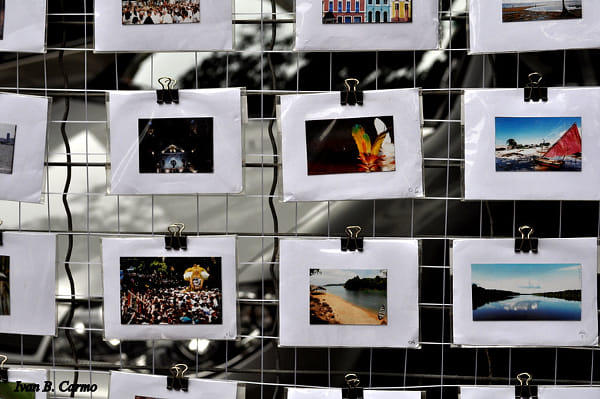
US$ 10,00 each. by Ivan B. Carmo on 500px.com
US$ 10,00 each. by Ivan B. Carmo


© Rebecca Knight
Ship figureheads have been around since people first set out to sea. Skilled maritime wood carvers create figureheads to appease a blend of superstition and self-promotion. Often in the form of elaborate wood carvings, they were meant to embody powerful spiritual forces to protect the ship. Also they symbolically show how sailors believed that a ship was not just a thing but an actual living being. This thought also ties in with the idea that in order to find its own way the ship needed to have eyes. These are incredible works of art which are often less considered in this modern age; however there were artists working alongside ship-builders over a long stretch of history - and still are to a limited degree.  No ship went to sea without its eyes.


figurehead, woman
Figurehead of the Falls Of Clyde - the only surviving fully-rigged, four-masted sailing ship left in the world - built 1878, Port Glasgow, Scotland. This ship was originally a full-rigged ship designed for global trade, later re-rigged as a Bark. This tall ship permanently moored in Honolulu Harbor at the Hawaii Maritime Center.


You may tend to think of figureheads as a prelude to hood ornaments - which are also being seen less frequently these days.  The figurehead on a ship at first was not just mere adornment, they were meant to represent matters important to seafarers.  In Ancient Egypt, for instance, figureheads were perceived to offer protection and vision, in the form of holy bird figures mounted on the prows. Roman ships often made show of their elite fighting capabilities by having a carving of a centurion in place. Phoenicians used the heads of horses as an embodiment of swiftness and Greek ships had boar heads to represent ferocity to frighten possible attackers.

Northern Europeans often decorated their long ships with a serpent figurehead. Some ships also had dragons, dolphins, or bulls. These were meant to fend off enemy ships along with their enemy's guardian spirits. Alternately ornate as opposed to fearsome, the swan became very popular in the 13th century; it was thought to imbue the ships with grace and mobility.  The figurehead carvers created for the seafarer a symbol of good luck carved and painted to represent a guard against being lost or otherwise compromised at sea.
Kalamar Nycel bow figurehead
The bow of the Kalmar Nyckel, a replica built in 1997 of the 1625 ship that carried the Swedish settlers that established New Sweden in 1628, now the modern city of Wilmington, Delaware, USA

Originally mounted on or carved directly onto the stern of the ship, figureheads were changed to the bowsprit following the forecastles taking their place above and protruding out from the ships' stern for a brief period in the middle ages. 17th century warships often had more elaborate designs to denote the relative importance of the ships, sometimes depicting a scene not just a roaring lion for example. In the late 18th century carvings came to represent the name of the ship which proved practical in the manner that many sailors could not read. Feminine forms usually bare-breasted rose in popularity due to sailor superstition that a naked woman would calm a storm at sea.


The industrial changes from sail to steam and from wood to iron in ship technology brought on the gradual decline of the use of figureheads. In the twentieth century ships began to have medallions or shields with figures as side-supports. The loss of the bowsprit, which was just above the usual placement site of a figurehead, is cited as a leading cause for the disappearing figureheads.


Mariners Museum Eagle
Eagle figurehead from the USS Lancaster, circa 1880 John Haley Bellamy, carver

In looking over figurehead carvings on ships from ancient times to today, we see much has changed. Some smaller modern ships and yachts will have figureheads according to the desire of the builder or owners. These tend to serve as decorative flourish that conveys a sense of prosperity and pride. Depending on who you ask, the use of a figurehead may just as well hearken back to demonstrating the spirit of the ship and serve to bolster the identity of the ship and its crew.


BelvaLockwoodShipFigurehead
Ship figurehead of Belva Lockwood


The figureheads of ships of bygone days are now shown as wood art sculptures on display in nautical museums such as the exhibit of the East India Hall in the Peabody/Essex Museum in Salem, Massachusetts, USA.  One could argue that in this way, past all the other meaning and purpose intended for figureheads, that they even serve as lasting symbols of ships similar to the purpose of graveyard statuary. 

The art form is not entirely lost and has its own particular facets of construction and problems unique to carvings in wood of this size - imagine working with a 14 ft., 3-ton block of wood to be carved in a way that will display properly at a 45 degree angle!  Maritime wood carvers today find themselves commissioned to make figureheads for replica ships and often apply their skills into making smaller versions of figureheads, even desk-top sized ones. Coat of Arms and even totem-poles are other types of wood carvings created with their specialized talents, and they often are called upon for restoration work.  


figurehead carver
Jack Whitehead - one of the
 great maritime carvers of the 20th century.
"Of all the objects made by man, the ship almost achieves a life of its own. When considering a figurehead, therefore, it is important to remember the ship that bore her. The ships have gone, but these wooden angels remain to tell their tales to those who care to listen." - Martin Jeffery, Ship Carver 


images used are public domain or © their respective owners. 
Here I am pleased to be interviewing the prolific artist D.K.Osorio from Northern California. D. K. works primarily in pen and ink drawings and oil paintings, but has been branching out recently into photography. Her black and white abstract and surrealist pieces are the most extensive part of her current body of artwork.

Abstract ink drawing
Pendulum Swing  © D.K. Osorio,
A keeper of time where there is none except you.

How long have you considered yourself an artist?
Ever since I was a little girl, drawing Snoopy cartoons.
Tell me about your first experience creating in your current medium:
My first experience in my current medium in pen drawing was around Halloween of 2012. There is for me a constantly present evolving need to create something challenging the metaphysical. And one creative source that I had yet to tap was my dark neurosis that I felt was too disturbing to express to a public forum. However, Halloween presented itself as a golden opportunity to expose this part of my creativity with some comfort.
What results are you looking for in response to your art?
To draw the viewer to experience an emotion that makes he or she react, no matter how positively or negatively. As long as they feel passionately for an artwork that I created then there becomes a strong connection, a link between them and my creative soul.
Abstract ink drawing
And She Was © D.K. Osorio,
Joining the world of missing persons. 
Missing enough to feel alright.
What does your art mean to you?
What it conveys is an extension of what I am feeling at the time. What I am experiencing in my day-to-day life will show up in my work.

What is the most annoying remark made to you about your art?
Someone once told me that they liked my art so much that they were going to make copies of it, and put it on their wall.

Do you have any regrets in your life as an artist?
The one regret I have is not having complete confidence in myself as an artist. It is always a constant battle in my head. Especially when I create an artwork that I feel is not up to the standards of others. I am my own worst critic.

What plans do you have for the future of your art?
The plans for my drawings are to one day publish them in a book, possibly in coffee book format telling a story behind each one or interconnect them into one story.

Do you have any advice for emerging artists?
Never stop marketing!
Abstract ink drawing

 A Shed Tear For You © D.K. Osorio,

A lot of emotion behind one small drop of water.
How to find D.K. Osorio online….
Abstract ink drawing
In The Hall  © D.K. Osorio,
 A tribal urge among broken glass.