Latest Posts

Showing posts sorted by relevance for query figurine. Sort by date Show all posts


Figurines are available in a wide variety of materials such as ceramic, clay, vinyl, metal, glass, wood and resin.  The base medium of the figurine to be painted needs to be taken into consideration when deciding on what would be the best paint to use.


Acrylic paint being applied to vinyl figurine.
Source: TanyaDavisArt

Acrylic paints can be used on all the aforementioned materials and are the most popular as they are easy to control, affordable, widely available, and dry quickly. There is a wide array of types of acrylic paints to choose from so make sure to read the directions to be certain they will suit your intended use. Look for brands such as Liquitex, Golden, Pebeo and Delta. Proper treatment of the surface will also determine just how successfully the paint you choose will perform and this will be outlined here.

For ceramic figurines use fine sanding paper to remove any ridges or lumps. Wash ceramics with water and sponge. After allowing it to dry, you then spray on one coat of matte spray varnish for a sealed consistent surface.  If the ceramic base color is not what you desire, then you should apply two base-coats in order to set a firm color foundation of your choosing.  

For molded resin, hard plastic and vinyl figurines use dish soap with warm water first. The soap is needed to make sure to wash away the mold-releasing agent. Molded figurines such as these do not require sanding; they are simply wash and go, no extra steps are necessary.

Clay is also a simple process.  After you bake it, apply your base coat.  No washing, no sanding.  If the surface is too smooth for your liking feel free to sand it. Clay reacts well to acrylics.


Gérôme - Painting Breathes Life into Sculpture
Painting Breathes Life into Sculpture, ii by Jean-Léon Gérôme, circa 1893

If the figurine you are painting is metal, be sure to sand the surface beforehand. Follow that with using an even coat of primer spray paint, letting it dry before you apply the next coat of paint.  An exception would be if your metal material was aluminum, then you would only need to wash the figurine and let it dry thoroughly before applying paint. When painting glass it is best to use paints specifically made for it.  Some have to be heat-treated.  If you wish to allow light to shine through the painted figurine, make sure you select transparent paints.

On wooden figurines you can use a regular wood stain or acrylic paint. If you choose to use paint, prime your wood well before applying color as wood is naturally porous and will absorb the paint if not primed. Ensure the surface is clean, then lightly sand and apply several coats of gesso or primer prior to actual decorative painting.

All figurine painting projects should be finished with 2 to 3 coats of spray clear-coat varnish, being sure to allow drying between applications. Another option is to use a glaze that is applied with brush. In the research for this article both oil and enamel model paints were explored and additional discussions with artists have brought me to the conclusion that acrylic paint is by far the best to use for figurines. Of course, feel free to experiment on your own and share the information if you please in the comments below.

Tanya Davis Visual Artist with foomi form custom vinyl in her studio.
all images © Tanya Davis
Tanya is an artist of many talents who does not limit herself to just one medium. She produces art in polymer clay, pencil, acrylic paint, mica powder pigments, Prismacolor markers, and digital photography. Her foremost style is Steampunk and she also uses art deco lines. Tanya often just pulls designs straight from nature or from who-knows-where. For this artist-interview we will focus on her latest endeavor with DIY vinyl toy customization. 

As a newcomer Munny artist on the custom toy figurine scene, Tanya Davis’ first custom Munny - a TRIKKY figurine that resembles a steampunk anthropomorphic cat - was on display at the Guzu Gallery in Austin, Texas March through May 2013. This first piece was also featured in Jerry's Artarama 2013 Munny Show and sold three days later.  She is most pleased to have found a welcoming local custom vinyl scene.

Why so many different approaches to making art?

I use multiple art mediums because it keeps me from getting bored.  Also I find that one type of process informs the other and so I can mingle my knowledge of, for instance, architecture and painting, which I use together to create clay sculptures.

Tell me about your first experience creating a customized toy:

In 2012 I was gift-shopping for my little cousin who was twelve.  She likes arts and crafts and I figured a couple of the small munnies would be a fun project for her. So while I got a couple of  2 inch ones for her, I went ahead and got myself a 4 inch TRIKKY. The Trikky sat on the floor patiently waiting for two months before I even took it out of the box.  You see, I have this thing about not wanting to try something new until I am ready because if I mess up then I have wasted the materials and I did not want to make a crappy customization on a $10 vinyl model.  Also I was preparing to make my debut art show for my polymer clay Steampunk Buddies that winter, and wanted to give the first Munny toy my full attention.

My Trikky custom is made of polymer clay and colored with acrylic paint.  I used the typical industrial steampunk style that I use on most of my figurines.  One admirer told me it looked like a Steampunk Hello Kitty.

Trikky MunnyWorld vinyl figure before and after customization.
You have also created a Sea Creature from a Foomi form munny toy.  What inspired you make it?

I must admit, it is very different from my usual style.  It is a fantasy creature that has many elements from different marine life all rolled into one.  It was very experimental and a spontaneous creation.  The big fish mouth gives it a pouty look.  My misplacing one of the arms of the toy resulted in my first sculpting of tentacles. It is a good practice since I want to play around with an octopus like design in the near future.

The Foomi sea creature was also my first use of Super Sculpey, and I discovered it was easily malleable and less sticky than the usual polymer clays I use.  The clay was a light beige color, so all the colors you see in the photo image were added by my painting the figurine.  The painting is a thing I am learning to have patience with.  Perhaps I will need to learn to work on two at a time in order to have something else to do while waiting for one coat to dry.


Foomi MunnyWorld vinyl form made into sea creature custom.
Foomi form based Sea Creature

What has your experience with the Munny World community been like?

I have received wonderful support and feedback from the Munny community. There are so many creative artists working on their own custom toys.  They inspire me and also give me lots of good feedback and advice.

That is great, aside from the encouragement - do you ever get any annoying remarks about your Munny figures?

I have had someone ask me if I could make a figurine smaller and cheaper.  This is probably the most annoying remark due to the fact that for the amount of effort and the quality of materials that go into making them, they are already at the lowest price points I can afford.  It is understandable that people want to get a bargain, but they need to keep in mind that these are handmade artworks and not some kind of mass-produced item from an assembly line.

What can we expect to see from you in your future Munny customizations?

I have an original Munny form lined up to become a steampunky-Cthulhu type character; that is unless I decide to make it something else right in the middle of creating it.  I have an organic process of letting the figurine kind of decide what it will be.  Similar to how many wood carvers and other subtractive artists work, only in reverse.  I am adding to it and the process will create itself.

I have a 2.5 inch Foomi form (smaller version of the Sea Creature’s base), which I may just apply a Zentangle design to.  Also I have a robot form, which is not MunnyWorld brand but another DIY custom toy.  It is the Android mascot for Google’s mobile platform of the same name.  I haven’t decided what I will do with it yet, but it is on the shelf waiting to be transformed.

Through Kickstarter I have watched designers produce their own toys and I have been contacted by an aspiring new toy designer which I may do a collaboration project with.  If this works out, I will have my contributions displayed at a Designer Con and get my name out there along with it.  I am withholding details because this is still in the negotiation stage.  There are many opportunities in this medium, which is adding to my overall portfolio.  I may even have a few vinyl based figures at my next showcase.

See more of Tanya’s art at her official site Tanya Davis Art
And keep up with her visually on Instagram 

art online, urban vinyl
Read more on the Munny in this article also on IOUart 


Kidrobot Inc.


MUNNYWORLD


It has been over a year since our first interview, when Tanya Davis was first expanding her creative work from sculpting and painting figurines to applying the same skills onto vinyl platforms. After all this time and
Penguin Engineer steampunk drawing penguin wrench watercolor pencil
Penguin Engineer by Tanya Davis


checking in regularly, there has truly been no pause in her actively making new art. In this interview I will attempt to bring our readers up to speed with her latest artistic endeavors.

How far has your experiment with vinyl platforms taken you?

It is still going and I am still trying different platforms. Most recently, I am tackling going larger. Outside of the initial MunnyWorld brand, my most successful work done on blank vinyls has been the Google Android mascot and Zukie bases. My most recent droid is a Penguin Engineer based on an illustration I created by the same name.
Penguin Engineer Droid Tanya Davis android figurine
Penguin Engineer Droid by Tanya Davis


Illustration, that is something new.  How did you get into that type of art?

It was more about me practicing drawing and also giving my hands a break from sculpting. Aside from chiefly commission figurine work, illustrative drawing and painting is my main art form right now.

Since the beginning of 2014 which one of your illustrations is your personal favorite? 

My Penguin Engineer because it is the first original character I created that has a completely developed background. It was done free-hand from start to finish on the illustration board without any transferring. It was also the first one I did with the Derwent watercolor pencils. This illustration is currently available in limited edition signed watercolor prints done by local printer Mindzai Creative. Right now (mid-June 2014) there are 18 left. I have them on hand when I publicly show my work or you may obtain this print here.

munny, custom vinyl, DIY toys


In MunnyWorld you can do anything you want!
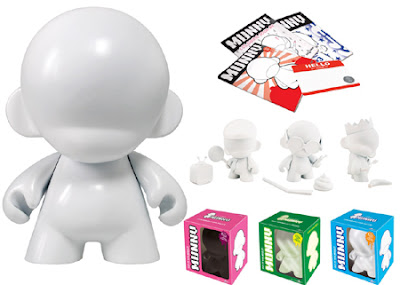
 KidRobot has been a leader in the counterculture phenomenon of art and design called “Urban Vinyl” ever since 2002 with the introduction of their first toy simply named Kidrobot ‘Bot. That is the robotic figure with the Mohawk-like fin thingy down the center of its head on their site. Custom Munny-making is a playful (or serious) creative project for ages 5 and up and making its mark on the art scene. What is a Munny? It’s like an unfinished doll or rather a full-on armature for an artist or sculptor to work on. The only limit in MunnyWorld is the artist’s imagination.

You might be wondering “Is this for kids, I mean the site says kid robot”… well actually many adults, one for example - artist Matt Groening, are creating their own versions from this series of dolls. It is additionally touted as a fun crafting idea for families to work on together, so you don’t have to consider yourself an artist to still have creative fun. Or, one could simply walk into the store to buy a gift for a youngster, and end up with a head full of ideas and a doll or 2 of their own to play with. Such is the story of newcomer Munny artist Tanya Davis who had her first TRIKKY doll creation on display at a local gallery in Spring 2013. A couple photos of this piece are being shared with her permission here. 


trikky munny, munny toy, munnyworldTrikky Munny, customized toy, munny steampunk, Tanya Davis


The Munny’s base form is made of a smooth white vinyl - sort of a blank canvas - that is safe to bake at 275F if applying polymer clays. Aside from paint, ink, and clay, there are many things you can do such as glue decoration to them, apply typographics, use yarn and fabric – you imagine it, you can make it happen to the Munny. It is also common for art teachers to assign Munny customization projects for their classes. They range in size from the "micro" at 2.5in and go up to the 18in “mega”. 


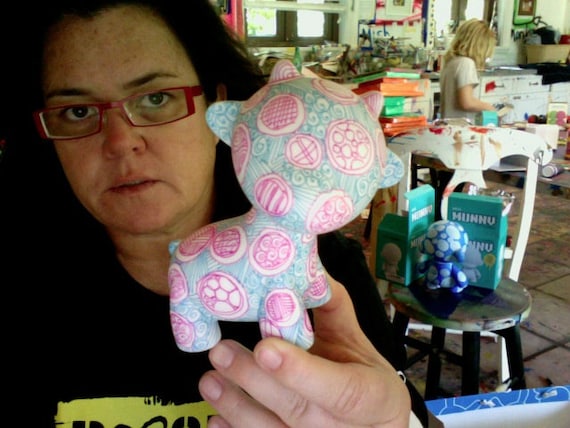
A celebrity who has helped promote the Munny is Rosie O’Donnell. She has mentioned them in interviews as she did on The Martha Stewart Show, and sold them from her etsy store in order to benefit her arts education school for children.


Raffy custom, Rosie Odonnell, munny toy, custom munny, custom raffy

The figurine shapes vary, with their own names, there is the original MUNNY and also BUB, TRIKKY, RAFFY, FOOMI and ROOZ. New releases come out every so often, and there are limited editions of unique doll forms and even a variety of premade vinyl accessories to go with them. The official site for more info on the MunnyWorld brand and a gallery showcasing an array of art types and styles of customized Munnys is at this link.  


Here is a video I found that shows the artistic process of one painter working on a Munny project with a short stop-animation story at the end.


Available on Amazon

*Please be aware that there is a shortage of MunnyWorld products due to decreased manufacturing of popular figures such as the ones mentioned here. 
Market prices will vary accordingly.