Latest Posts

Showing posts sorted by relevance for query tutorial. Sort by date Show all posts
By R. L. Passman
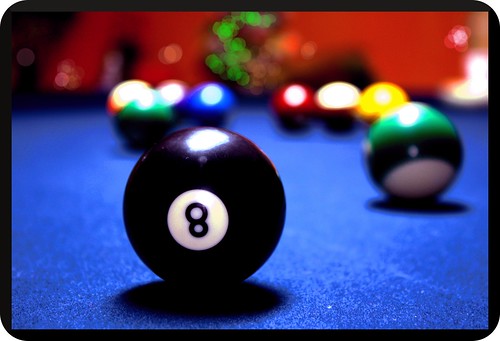
048/365 Bokeh Billiard
In this digital photography tutorial I discuss the technique of isolating the subject matter of your photograph using the focusing technique of bokeh. Bokeh is a Japanese word that roughly translates as the aesthetic quality of the blur. The technique uses depth of field to isolate a subject against a background that is out of focus. The subject matter is in sharp focus thereby emphasizing the subject while hinting at a sense of place without specificity.

I often use this technique while photographing out of doors, especially when I want to isolate a flower or plant in an otherwise cluttered environment. Because I want to 'see' the subject as the main piece of the photograph, I use any one of several approaches available to me to capture the essence of the subject.
Pink flower petals, bokeh
Public Domain CC0

Using Macro Rings

One technique is to extend the placement of the lens relative to the image capture medium using extension tubes. The effect created by extending the lens relative to the 'film' is to absolutely isolate the subject against an otherwise blurred background while magnifying the subject to reveal hidden detail. I find using extension tubes and a long lens is ideal for picking up nuanced detail in the interior of flowers, when photographing insects (when they agree to sit still for you) and other subjects where exploded and enlarged detail provides a visual impact that is otherwise missing.

When using macro rings, a tripod is an absolute requirement. The front of the lens is place quite close to the subject and your ability to hand hold the camera, focus and shoot is close to impossible. The steady nature of the tripod allows you to do all that is required to make a powerful, engaging image.

Using Depth of Field
Carlos Delgado image of Canon EF 70-20mm  f2.8 lens
Canon with f2.8 lens
 Photo credit: Carlos Delgado
CCASA3.0


Often in the field I shoot with a 28-105mm f2.8 lens. When choosing to isolate a subject I open the lens up fully and use the longest available focal length. I choose a position that is close to the subject, although I need not be so completely on top of the subject so as to scare away any insect life that might be feeding on the flower. I focus on the subject letting the background fall off into a blurry amalgamation of blended color and a resulting graphic design. Steadying the camera on a tripod is also needed to assure a steady hand.

The difference between the long lens wide open and the extension tubes is one of degree of magnification. With the long lens the subject appears more natural, less magnified if you will. In terms of isolation, the whole purpose of bokeh there is no significant difference.

In terms of impact, either extension tubes or long lens solutions are an interesting way to provide your viewer an experience of isolation of subject matter which, in fact, mirrors what the eye actually sees as we focus on objects close to our eyes. It is my sincere hope that you enjoyed this digital photography tutorial on bokeh.


Roger Passman is an award winning professional photographer located in Northern Illinois. He often leads creative photo workshops designed for beginning through intermediate amateur photographers. He regularly exhibits his work throughout the Midwest at juried art fairs and gallery showings.
 Article Source
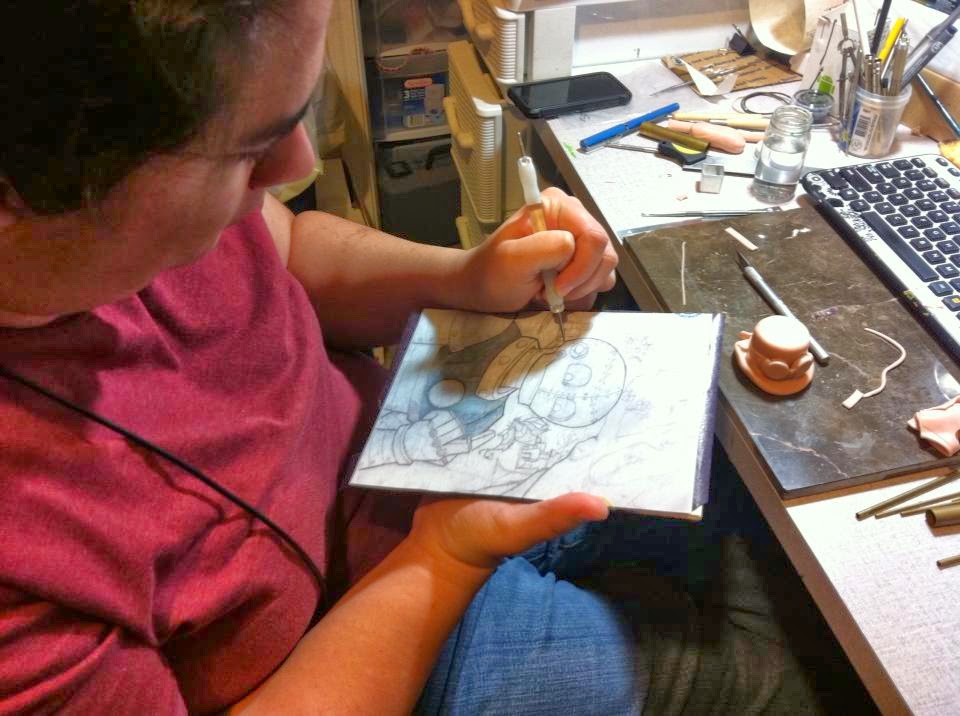
pen tool being used for carbon paper transfer
So you have drawn something into your sketchbook or on loose scratch paper that you wish to transfer to either illustration board or better paper, but you aren't sure if you can do it free hand again? I have a solution for you that I learned in one of my drafting classes in college. This process is best for transferring onto paper or illustration board; I have not used this process on anything else. I have also only used it for small images. The largest size has been 8.5 x 11 inch, however, art and drafting stores will have larger sheets of Carbon paper if you want to go larger.

This technique is also helpful when you have traveled from home or don't have a nifty light box for tracing.


Materials needed

  1. Image you want to transfer
  2. Carbon Paper - find at craft or office supply stores; the sheets are reusable and 1 package can last for many years
  3. Drafting dots or tape specific to painting - for easy removal
  4. Embossing pen tool
  5. Eraser
  6. Pens (if inking)
three images showing how the carbon paper transfer occurs with the resulting image.
Tracing with embossing tool (top), close-up detail
(middle),transferred image (bottom).


  • Take your drawn image and make a photocopy of it. This way you can change size easily and position it on the desired paper easier.
  • Place a sheet of carbon paper darker side down and set it aside, but not on your target area yet. Carbon paper is also available in white which is useful if you are transferring to a black or simply darker target.
  • Trim the excess paper from around the copy of the image.  
  • Using the drafting dots take the copy of your drawing to the carbon paper.   Remember the dark (inked) side should be lying on the work surface.
  • Now position the carbon paper gently onto your chosen medium. Gently place tape to at least two corners so that it is secure.

*Do not rub or press too hard on the image as this will transfer*


  • Without pressing too hard trace your image with the embossing pen tool.  It is best to plan where you are to start and what path you will take. This way you can be sure to transfer the whole drawing. You can lift the paper to also see progress as you go, but try not to do so too often because you could accidentally move the image the image. When done remove the carbon paper. If inking by  hand go ahead and do so using the eraser to get rid of transfer lines. I use a gum eraser for my work. It doesn't leave smears or residue. They also work better at taking up lines.

*If you press too hard during the tracing they will NOT erase - be GENTLE*


  • At this point if you want the final artwork to be painted -  just paint.

Although there are many different transfer methods, this is one that I have been adept with since my days in architecture classes. This is easy, fast, without needing much space or set-up ahead of time and it can be done anywhere. I like to share information about tools and materials I use.

I hope you have enjoyed this tutorial and if you have any questions feel free to ask!


All images © Tanya Davis
By Eric Cross

There is a famous quote that alludes to the idea that a picture is worth a thousand words. Well, while agreeing with this quote, it is essential to state that a well taken photograph is worth much more than a thousand words. Indeed, an excellent photo has the ability to not only express beauty, but also store the fondest of memories. Photography is an art which requires skill and technique. To help you gain the necessary skills, here is an article outlining 5 basic ideas for photographers.
    Red squirrel interested in a camera
    photo: Peter Trimming
  1. Acquire the best camera
    It is quite hard to talk about ideas for photographers without mentioning the camera; for it is the device through which photos are taken. Cameras come in various sizes, shapes, color and most importantly resolution powers. There is no doubt that technology has revolutionized the photography industry because it has spearheaded the manufacture and production of high resolution cameras which have the ability to shoot crisp-clear photographs. Therefore, the first and most essential idea to great photography is to ensure that you are equipped with a powerful camera.
  2. Detail
    Taking a great picture is about capturing that particular detail which will make the difference. Every photo should be taken with absolute creativity to ensure that all the details are captured. Even when there appears to be no outstanding detail, try to look closely and you will certainly find one. Just like drawing a picture to represent a thousand words, creativity goes a long way in delivering a memorable photo.
  3. Light
    Cameras directly depend on sufficient lighting to produce excellent shots. While this is not to say that photos cannot be taken during the night or in dark places, it is important to confirm that light is an integral element of photography. If you intend to take photos in locations where natural lighting is alien or limited, you have to use an artificial lighting source such as electricity to increase your chances of taking a beautiful picture. Although technology has brought us powerful cameras which are capable of independently taking photos in dark locations, you have to keep in mind that the trick here is to shoot great pictures with these 5 great ideas for photographers.
  4. Background
    Almost always, a great photo has an amazing background. Here, two aspects of photography come into play; instant and selective. There are times when you have to take photos without having the option to change locations or backgrounds for that matter. A case in point is when you are taking photos of people attending a certain ceremony. You are required to make use of your creativity and alertness to produce high quality picture, but when you have the freedom to choose from various backgrounds, be sure to go with smoky or watery backgrounds as they bring the best out of a photo.
  5. Photo framing
    Of these 5 ideas for photographers, photo framing is definitely the easiest to implement. This is largely because framing the photo adds a touch of creativity and design to it. Different photos require different frames for them to be great. You need to exploit the use of various frames to determine the most suited to fit on a particular photo.
In conclusion, there are numerous tips, but the outlined 5 great photography photo ideas will give you a perfect start to taking awesome pictures! Once you master these basics you can start looking towards more advanced techniques like trick photography and special effects.

photog
Author Eric Cross
Eric Cross is a budding photographer who balances his time taking photographs with time spent writing about taking photographs, putting together a free tutorial guide for everyone wanting to learn about trick photography and special effects. 

Article Source

items needed for brush careItems needed:

· Brush Screen
· Brush Restorer
· Old plastic cards
· Rubber bands
· Dish soap or shampoo
· Odorless mineral spirits
· Jar with a metal coil


            The best advice anyone could follow to prolong the life of their brushes is to IMMEDIATELY clean them after use. For water based mediums this is generally a no-brainer, because five minutes could mean the beginning of your new brush’s life in the trash bin. What about oils since they take longer to dry? Oils still need to be cleaned immediately; just because you cannot see the paint residue on the bristles does not mean it is not there. If you do not clean them straightway, residue will build in the ferrule of the brush (where the bristles connect to the handle) and will eventually stiffen the bristles and reduce their ability to evenly distribute paint.

To begin the cleaning process, you first must use a diluting agent to get rid of most of the paint. For acrylics and watercolors, water and a brush screen is about as efficient as it will get. Oils require a solvent. The most common solvents are mineral spirits or turpentine, although these pose certain health risks with inhalation and skin contact such as CPD (chronic painter’s syndrome). For more information on potential hazards, visit this resource pageThere are many healthier alternatives including linseed oil, pure citrus peel oil, white vinegar, or spike lavender. If you are using spirits or vinegar, you want to clean your brush in a jar with a metal coil inside of it. The coil is a non abrasive way to rid your brush of paint. If you are using a higher viscosity oil solvent, you want to load up your brush and scrape it clean with a palette knife, from the heel to the toe of the brush. You will want to check with your local waste removal service to find out where to dispose of hazardous material.

ruined paint brush,
This is the result of storing a brush with the bristles down.
This is generally reversible with much reconditioning.
The brushes need to be washed once again, this time with an anti-oil agent like dish soap or shampoo. Shampoo tends to leave the bristles softer than dish-soap, but it just comes down to your preference. Do not store your brushes vertically with the bristles down, this will cause permanent warping to the hairs. You want to stress the bristles the least amount possible, for each stress is one day in the life of a brush. The final step which is they drying phase, which is often not given much consideration. Take your fingers and smooth out the bristles from the ferrule to the tip of the brush. You want to store your brush (bristles up!) in a warm and dry place like a windowsill. Otherwise your brush could be growing mold and bacteria inside of its bristles, inhibiting the even flow or the color of your paint.

soak brushes held with rubber bands
Use your rubber-bands to make sure the bristles
 are not touching the bottom of the jar when
soaking in restorative fluid.
If your brushes are already glued shut with dried paint, it may not be too late to play a little Victor Frankenstein and bring them back from the grave. One use for dried brushes is to just use them. I keep a variety of brushes that I don’t clean on purpose, because they allow you certain textures and lines with one stroke as opposed to making a texture with several strokes and layers.  Field grass is a prime example of the benefits of keeping a dried fan brush.

If you want to restore it, it is possible to soak it in brush restorer, available at any art supply store. Be careful, this stuff is very strong (in chemical, not in smell).  If you leave your brushes in the restorer overnight, you will find your bristles dissolving and your brushes sticking together as the paint/plastic on the handles is melting. If your bristles are frayed, take two plastic cards and sandwich the brush between them. Secure and apply pressure with rubber bands and let it stew for a couple of days. You can also close just the bristles of brush into a book and apply weight on top. I would say that even after these restoration techniques, 25% of brushes still need to be thrown away.

reshaping brush with cards
When reshaping a brush, make sure the cards are not only on the bristles. The edge of the cards should be resting on the ferrule. This prevents the toe of the brush from spreading out horizontally.

I hope you could benefit from this quick tutorial, and happy painting!


Further Reading and Sources:

Turner, Jacques. Brushes: a Handbook for Artists and Artisans. New York: Design Pr, 1992.
Mayer, Ralph. The Artist's Handbook of Materials and Techniques. 5th ed. New York, N.Y., U.S.A.: Viking, 1991.


 Mary, Willenbrink, and Willenbrink Mark. Oil Painting for the Absolute Beginner. Cincinnati, Ohio: North Light Books, 2010.


learn to make art, easy art, creativity
Simple ways to achieve stunning and/or lovable pieces of art.