Latest Posts

Showing posts sorted by relevance for query materials. Sort by date Show all posts
Joshua Mason is a painter who studied Fine Arts at Gwen Frostic School of Art and currently lives and works on the coast of Southern Michigan with a summer studio in Northern Michigan. He teaches painting and likes to emphasize the field as an artifact of spontaneity in his lessons. This summer Joshua is teaching a workshop exploring found materials and land art. 
"I like to create my own interpretation of the projects or lessons alongside my students. What I enjoy most about teaching is the atmosphere of active creation as a group."
Materia Forma - Riverside I


Tell me about your first experience painting:

My mother used to paint crafts and nick-knacks and some of my earliest memories are sitting on her knee watching the brush go back and forth. Another early experience was a book by Werner Haftmann called Painting in the Twentieth Century. 

At what point in your life did you come to consider yourself an artist?

This article will cover the basic question about the nature of art, just what is it? Does art record beauty or truth? Does it imitate reality or does it express more than nature itself? Does it create fantasy? Does one need to be skilled to create art? 


ready-made art, art at an art gallery
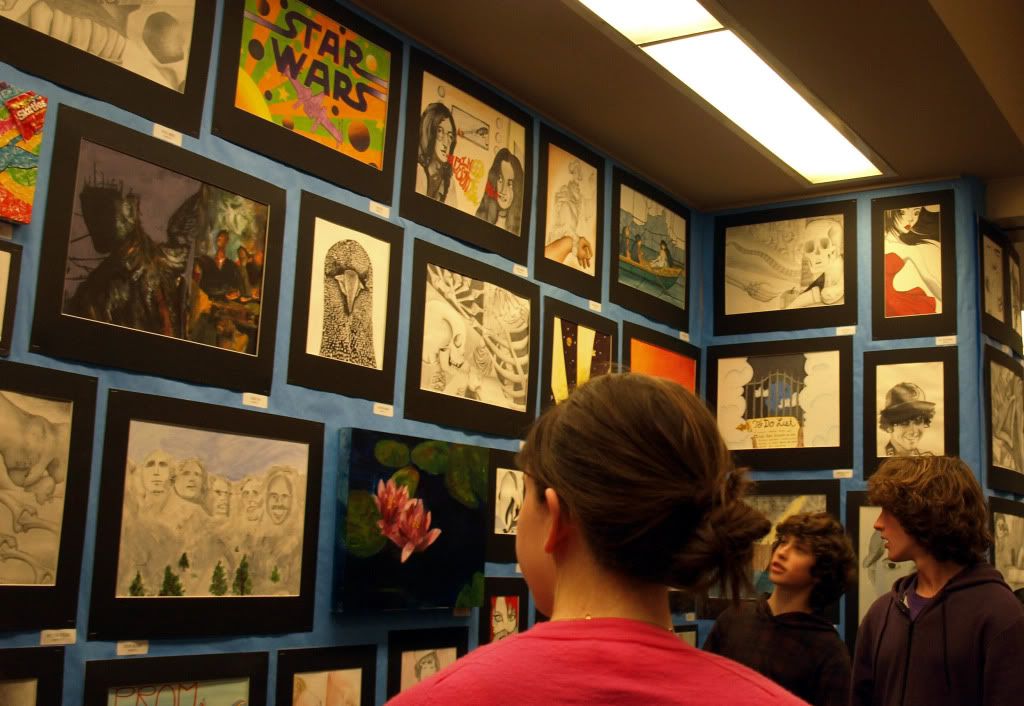
Scene at an art gallery, how does this art speak to you?
The intent is to embody seasons with still-life presentation.
French artist Marcel Duchamp's "ready-made" series was neither the first nor the last time that supposed art would cause controversy and stir debate on what constitutes the criteria by which an object can be called "art." As this is but only one modest-length article I can only touch on the definition of art, and hopefully not oversimplify it.  Defining art is a subject that delves into the very heart of creativity, and to do so we will need to look back in history to see how much art has changed.

All through the centuries art includes human agency. After all keep in mind that the word art is related to artificial, which means produced by humans. From the days of cave-dwelling prehistoric people art has been an integral part of our lives. Though we may need art to enhance the enjoyment and meaning in our lives, we do not use it to survive physically. 


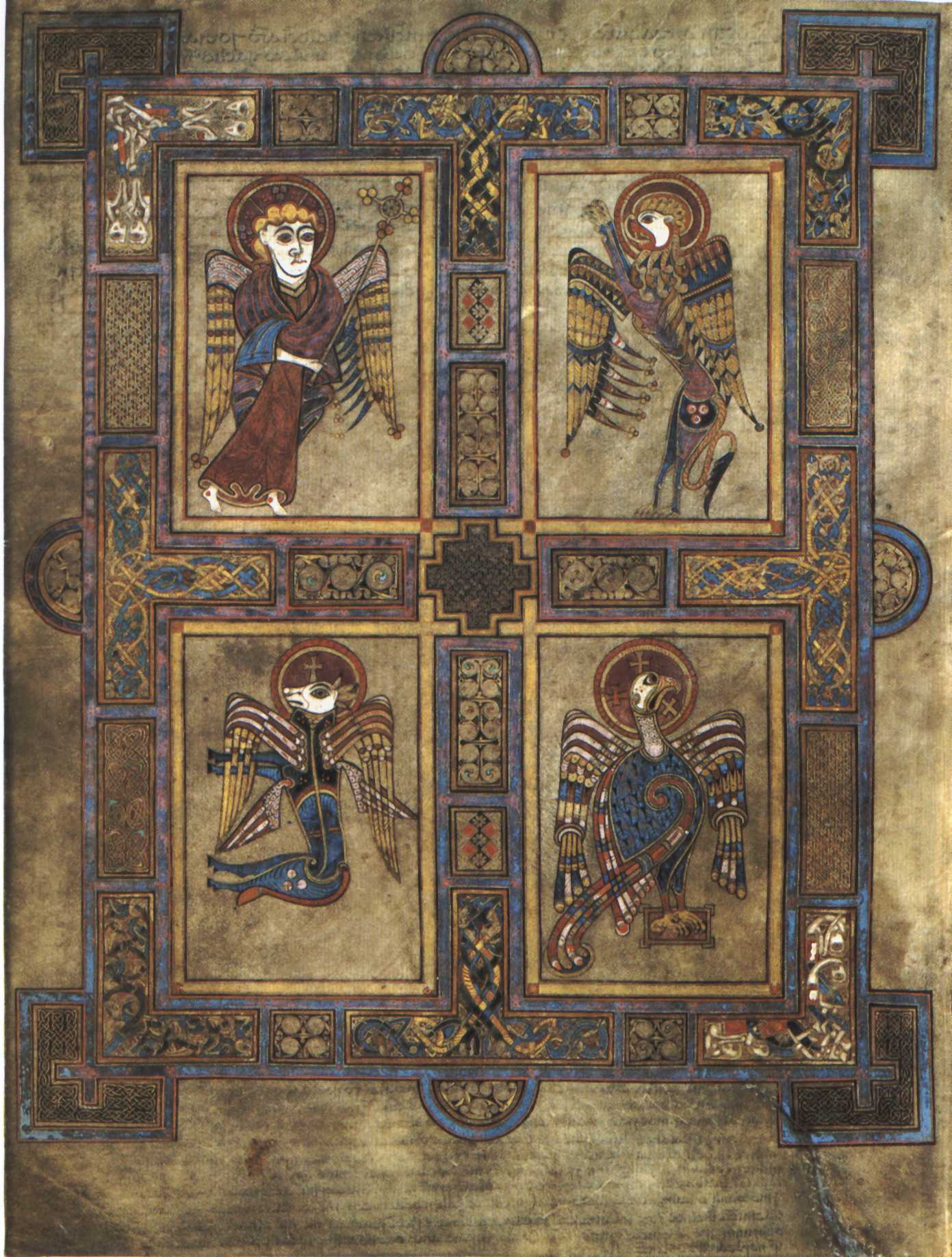
The 11-12th century definition of art according to Oxford English Dictionary is: "Skill at doing anything as a result of knowledge and practice". This means that the painter who embellished the Book of Kells would have the notion that an artist and craftsman were one and the same. It was not until the Age of Enlightenment, 1700-1800, where the attitude about art started to change. Art started to be considered as the use of skills to produce beauty. New standards of taste and elegance were introduced and the status of the artist was thus elevated.


Book of Kells, 12th century art
Illustration from the Book of Kells, a 1200 year old book.


By the 19th century people started to embrace the idea that art was not just meant to please but to aspire towards perfection. While this was a clear reaffirmation of the importance of skill in the creation of beautiful works of art, ideals were also being established imbuing artists as prophetic conduits of new cultural concepts. This ideal is known as the Avant Garde movement in which the artist was considered a member of a sublime class with the power to shape the minds of people with their art. This added to the creative powers of artists to allow them their own answer to "What is art?" The artist was now allowed, even expected, to take liberties with established techniques, subjects and ideas of the role art plays. 

With the rise of democracy and the middle class art became accessible to more people and so those that had not much exposure before were learning of art and becoming patrons. Modernism in the later 19th century brought forth such movements as impressionism, expressionism and symbolism. The visual language of Modernism is a product of the industrial revolution. The urge to embrace the new realities and materials of the industrial age was a common urge of the masses and through literature, art and design these feelings were expressed. Much of the modernist movements have been attempts to adjust the mind of society at large to the industrial innovations taking place all around.

In keeping with human nature there is present then and now a resistance to change and a tendency towards nostalgia and tradition. In visual arts there is a taste for classic decorative details, realism in painting, and a general preference for the elaborate. This is a stark contrast with the modernist simplicity and retreat from realism. The emphasis on form also resulted in attention to the materials used, and the visual qualities they offer.

Since then many types of artistic expression previously deemed unconventional have entered into culture. This would explain why things are considered art even though artists' intentions are very different and materials used are without any discernible expectations or limitations. What motivates artists could be any of the following: to beautify, express, illustrate, mediate, persuade, record, re-define reality and redefine art. And still yet there are those that make it just because they feel the urge to make art and the process makes them happy, a sort of self-therapy.

Competing answers are typically given to the inquiry of "What is Art?", indeed, as the title of this article announces forthright it is a subjective matter. There is disunity in the classes of artworks not to mention the differing concepts of Universal versus Western traditions and institutions. Answering the question of what makes art art is always flawed and incomplete due to such factors. 

Still, there are definitive responses which stand on their own as earnest attempts to explain as much as possible and capture what unity that there is to capture. What do you think art is?  Was there something left out here in this article that you feel merits attention?  Please feel free to comment below, because this is a subjective inquiry that is good for us to keep talking about in the art community.


art show, art gallery, art display, many kinds of art
Art is as you choose to see it.


© Rebecca H Knight, images and media used are public domain or © their respective owners. All rights reserved.

Udemy Art History Renaissance to 20th Century
There are some that think that if they just had the talent to be a great artist then they would automatically become rich overnight.  Apparently these folks have never heard the term “starving artist” or really taken a good look at the tragic and destitute lives of some of the most posthumously renowned and treasured artists in history.  It is difficult to understand how on earth a financially impoverished artist could even afford materials to create their art.  Artists with wage-earning jobs only creating their work part-time often end up putting what money they receive from sales back into sustaining their ability to continue their art projects.  That is at least a self-sustaining scenario and the art is still being created and enriching the world – if not the artist.  The point I am taking to task here is that financial security does not kick in automatically just from producing art.

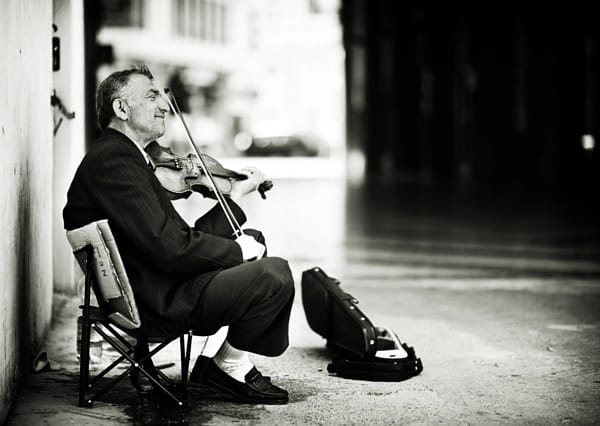
Arte en todas partes by Manuel Orero on 500px.com
The music is first, the busking is secondary.
Arte en todas partes by Manuel Orero

As a part-time artist, writer, or musician with a full-time job there is the ability to pursue creative endeavors supported by the additional steady income. However, there is also a hugely negative factor within this arrangement. The time and energy put into earning income from a regular job not only detracts from someone’s creative efforts, it effectively stifles them.  Further damaging their artistic careers by having limited availability makes it difficult to attend a show or to set appointments with prospective clients.  Not having the flexibility of having an open schedule takes away any ability to compete with a full-time creative colleague. 


Many artists do not have time for marketing and promoting their work and may not even have found a particular niche that their work fits in.  This is a classic example of the creative mindset removed from one of business-oriented concepts and practices.  After all, when you have art to do, it is hard find time for other things – especially something as banal as business.  However it is a matter of one thing depending on the other for any creative who is serious about producing on a professional level.  Many do nurture the skills needed to help promote their presence in the community.  It is something that will take a lot of patience, as time and relationship-building are important in addition to learning marketing skills.  When necessary, and if they are able to afford to do so, artists will find agents who can work for them to aid in the business side of things.  These can be event coordinators, gallery or shop owners, webpage designers, SEO builders – the list goes on.  For the most part, if a means of promotion exists then there are those whose services can be hired to do it.  This is the investing in oneself portion, beyond materials and tools, which also highlights the point that making art is not about the money.  


Exhibition at The Avenue - London by Ben Heine on 500px.com
An exhibition promotes an artist, and the artist presenting must invest in their event.
Exhibition at The Avenue - London by Ben Heine

The money is a necessary element to keep the artwork producible and to bring it to the masses, but it is not where the art comes from.  In the business frame of mind profit is the ideal result – however ideals are subjective. 

The ultimate goal most people who create art tell me about is this: the feeling of having made something that touched someone.  Whether it made them change their perspective or simply reminds them of something that they care deeply for, being able to see another person have a connection to the painting, book, photo, song, drawing, etc.  -it is what being an artist is about.  If your work can produce such an emotional impression on another person, there is no actual dollar value you can put on that.  It is the appreciation element, that intangible but incredibly rewarding moment when understanding or empathy occurs as a reaction to an artwork. 

In a previous article I wrote about the Value of Art.  In effect, here I am also expanding upon that theme.  I wanted to write more to really emphasize that artists are not at all about what some perceive –greedy or money-driven. Artists make art simply because they CAN.  Some say it is a part of their nature and a compulsion towards creativity will keep them making art even if no one is looking at it, much less if they are making monetary profit.  The rarity and the status of collectible art and the inflated value of popular artists is not the rule.

Independently, being an artist is not all about the money; and even if your work ends up on the high end price range, there is no guarantee it will happen while you are still around to notice.  There are those who feed the notion that being an artist is all big money making and that is what is seen often in Hollywood or in Art Museums.  If you are doing what you love and you get to enjoy doing so, that is the first gift of making art.  The second is having recognition and connection with other people.  When someone pays an artist it is often just barely compensating for what went into the actual creation of the work, yet it is nudging them on and saying “Please continue.”  


© Rebecca H Knight, images are © their respective owners. All rights reserved


Figurines are available in a wide variety of materials such as ceramic, clay, vinyl, metal, glass, wood and resin.  The base medium of the figurine to be painted needs to be taken into consideration when deciding on what would be the best paint to use.


Acrylic paint being applied to vinyl figurine.
Source: TanyaDavisArt

Acrylic paints can be used on all the aforementioned materials and are the most popular as they are easy to control, affordable, widely available, and dry quickly. There is a wide array of types of acrylic paints to choose from so make sure to read the directions to be certain they will suit your intended use. Look for brands such as Liquitex, Golden, Pebeo and Delta. Proper treatment of the surface will also determine just how successfully the paint you choose will perform and this will be outlined here.

For ceramic figurines use fine sanding paper to remove any ridges or lumps. Wash ceramics with water and sponge. After allowing it to dry, you then spray on one coat of matte spray varnish for a sealed consistent surface.  If the ceramic base color is not what you desire, then you should apply two base-coats in order to set a firm color foundation of your choosing.  

For molded resin, hard plastic and vinyl figurines use dish soap with warm water first. The soap is needed to make sure to wash away the mold-releasing agent. Molded figurines such as these do not require sanding; they are simply wash and go, no extra steps are necessary.

Clay is also a simple process.  After you bake it, apply your base coat.  No washing, no sanding.  If the surface is too smooth for your liking feel free to sand it. Clay reacts well to acrylics.


Gérôme - Painting Breathes Life into Sculpture
Painting Breathes Life into Sculpture, ii by Jean-Léon Gérôme, circa 1893

If the figurine you are painting is metal, be sure to sand the surface beforehand. Follow that with using an even coat of primer spray paint, letting it dry before you apply the next coat of paint.  An exception would be if your metal material was aluminum, then you would only need to wash the figurine and let it dry thoroughly before applying paint. When painting glass it is best to use paints specifically made for it.  Some have to be heat-treated.  If you wish to allow light to shine through the painted figurine, make sure you select transparent paints.

On wooden figurines you can use a regular wood stain or acrylic paint. If you choose to use paint, prime your wood well before applying color as wood is naturally porous and will absorb the paint if not primed. Ensure the surface is clean, then lightly sand and apply several coats of gesso or primer prior to actual decorative painting.

All figurine painting projects should be finished with 2 to 3 coats of spray clear-coat varnish, being sure to allow drying between applications. Another option is to use a glaze that is applied with brush. In the research for this article both oil and enamel model paints were explored and additional discussions with artists have brought me to the conclusion that acrylic paint is by far the best to use for figurines. Of course, feel free to experiment on your own and share the information if you please in the comments below.
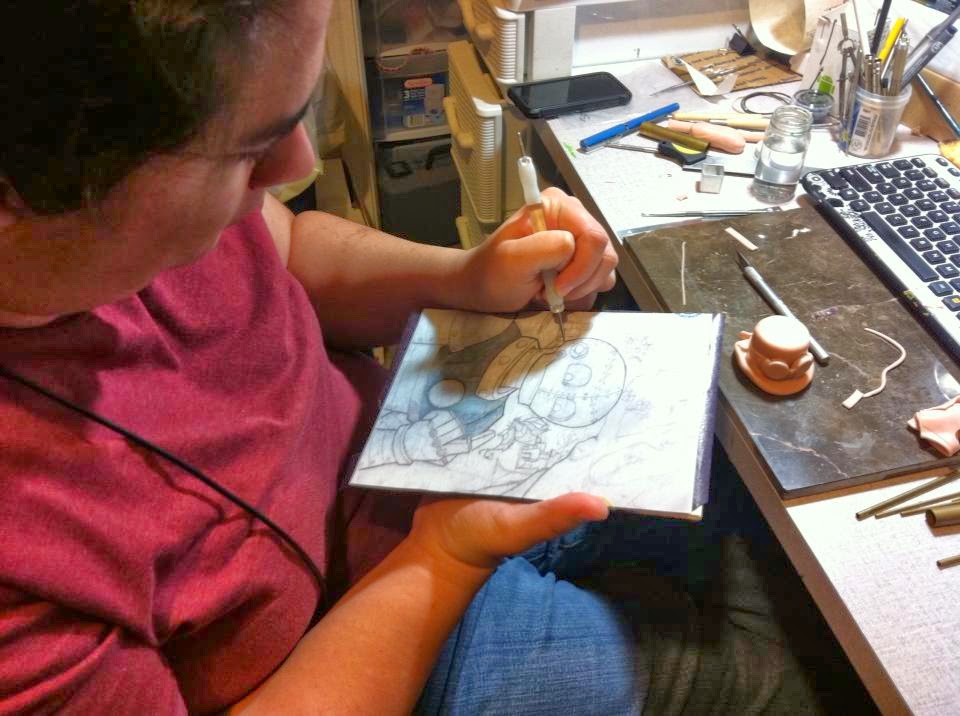
pen tool being used for carbon paper transfer
So you have drawn something into your sketchbook or on loose scratch paper that you wish to transfer to either illustration board or better paper, but you aren't sure if you can do it free hand again? I have a solution for you that I learned in one of my drafting classes in college. This process is best for transferring onto paper or illustration board; I have not used this process on anything else. I have also only used it for small images. The largest size has been 8.5 x 11 inch, however, art and drafting stores will have larger sheets of Carbon paper if you want to go larger.

This technique is also helpful when you have traveled from home or don't have a nifty light box for tracing.


Materials needed

  1. Image you want to transfer
  2. Carbon Paper - find at craft or office supply stores; the sheets are reusable and 1 package can last for many years
  3. Drafting dots or tape specific to painting - for easy removal
  4. Embossing pen tool
  5. Eraser
  6. Pens (if inking)
three images showing how the carbon paper transfer occurs with the resulting image.
Tracing with embossing tool (top), close-up detail
(middle),transferred image (bottom).


  • Take your drawn image and make a photocopy of it. This way you can change size easily and position it on the desired paper easier.
  • Place a sheet of carbon paper darker side down and set it aside, but not on your target area yet. Carbon paper is also available in white which is useful if you are transferring to a black or simply darker target.
  • Trim the excess paper from around the copy of the image.  
  • Using the drafting dots take the copy of your drawing to the carbon paper.   Remember the dark (inked) side should be lying on the work surface.
  • Now position the carbon paper gently onto your chosen medium. Gently place tape to at least two corners so that it is secure.

*Do not rub or press too hard on the image as this will transfer*


  • Without pressing too hard trace your image with the embossing pen tool.  It is best to plan where you are to start and what path you will take. This way you can be sure to transfer the whole drawing. You can lift the paper to also see progress as you go, but try not to do so too often because you could accidentally move the image the image. When done remove the carbon paper. If inking by  hand go ahead and do so using the eraser to get rid of transfer lines. I use a gum eraser for my work. It doesn't leave smears or residue. They also work better at taking up lines.

*If you press too hard during the tracing they will NOT erase - be GENTLE*


  • At this point if you want the final artwork to be painted -  just paint.

Although there are many different transfer methods, this is one that I have been adept with since my days in architecture classes. This is easy, fast, without needing much space or set-up ahead of time and it can be done anywhere. I like to share information about tools and materials I use.

I hope you have enjoyed this tutorial and if you have any questions feel free to ask!


All images © Tanya Davis

Tanya Davis Visual Artist with foomi form custom vinyl in her studio.
all images © Tanya Davis
Tanya is an artist of many talents who does not limit herself to just one medium. She produces art in polymer clay, pencil, acrylic paint, mica powder pigments, Prismacolor markers, and digital photography. Her foremost style is Steampunk and she also uses art deco lines. Tanya often just pulls designs straight from nature or from who-knows-where. For this artist-interview we will focus on her latest endeavor with DIY vinyl toy customization. 

As a newcomer Munny artist on the custom toy figurine scene, Tanya Davis’ first custom Munny - a TRIKKY figurine that resembles a steampunk anthropomorphic cat - was on display at the Guzu Gallery in Austin, Texas March through May 2013. This first piece was also featured in Jerry's Artarama 2013 Munny Show and sold three days later.  She is most pleased to have found a welcoming local custom vinyl scene.

Why so many different approaches to making art?

I use multiple art mediums because it keeps me from getting bored.  Also I find that one type of process informs the other and so I can mingle my knowledge of, for instance, architecture and painting, which I use together to create clay sculptures.

Tell me about your first experience creating a customized toy:

In 2012 I was gift-shopping for my little cousin who was twelve.  She likes arts and crafts and I figured a couple of the small munnies would be a fun project for her. So while I got a couple of  2 inch ones for her, I went ahead and got myself a 4 inch TRIKKY. The Trikky sat on the floor patiently waiting for two months before I even took it out of the box.  You see, I have this thing about not wanting to try something new until I am ready because if I mess up then I have wasted the materials and I did not want to make a crappy customization on a $10 vinyl model.  Also I was preparing to make my debut art show for my polymer clay Steampunk Buddies that winter, and wanted to give the first Munny toy my full attention.

My Trikky custom is made of polymer clay and colored with acrylic paint.  I used the typical industrial steampunk style that I use on most of my figurines.  One admirer told me it looked like a Steampunk Hello Kitty.

Trikky MunnyWorld vinyl figure before and after customization.
You have also created a Sea Creature from a Foomi form munny toy.  What inspired you make it?

I must admit, it is very different from my usual style.  It is a fantasy creature that has many elements from different marine life all rolled into one.  It was very experimental and a spontaneous creation.  The big fish mouth gives it a pouty look.  My misplacing one of the arms of the toy resulted in my first sculpting of tentacles. It is a good practice since I want to play around with an octopus like design in the near future.

The Foomi sea creature was also my first use of Super Sculpey, and I discovered it was easily malleable and less sticky than the usual polymer clays I use.  The clay was a light beige color, so all the colors you see in the photo image were added by my painting the figurine.  The painting is a thing I am learning to have patience with.  Perhaps I will need to learn to work on two at a time in order to have something else to do while waiting for one coat to dry.


Foomi MunnyWorld vinyl form made into sea creature custom.
Foomi form based Sea Creature

What has your experience with the Munny World community been like?

I have received wonderful support and feedback from the Munny community. There are so many creative artists working on their own custom toys.  They inspire me and also give me lots of good feedback and advice.

That is great, aside from the encouragement - do you ever get any annoying remarks about your Munny figures?

I have had someone ask me if I could make a figurine smaller and cheaper.  This is probably the most annoying remark due to the fact that for the amount of effort and the quality of materials that go into making them, they are already at the lowest price points I can afford.  It is understandable that people want to get a bargain, but they need to keep in mind that these are handmade artworks and not some kind of mass-produced item from an assembly line.

What can we expect to see from you in your future Munny customizations?

I have an original Munny form lined up to become a steampunky-Cthulhu type character; that is unless I decide to make it something else right in the middle of creating it.  I have an organic process of letting the figurine kind of decide what it will be.  Similar to how many wood carvers and other subtractive artists work, only in reverse.  I am adding to it and the process will create itself.

I have a 2.5 inch Foomi form (smaller version of the Sea Creature’s base), which I may just apply a Zentangle design to.  Also I have a robot form, which is not MunnyWorld brand but another DIY custom toy.  It is the Android mascot for Google’s mobile platform of the same name.  I haven’t decided what I will do with it yet, but it is on the shelf waiting to be transformed.

Through Kickstarter I have watched designers produce their own toys and I have been contacted by an aspiring new toy designer which I may do a collaboration project with.  If this works out, I will have my contributions displayed at a Designer Con and get my name out there along with it.  I am withholding details because this is still in the negotiation stage.  There are many opportunities in this medium, which is adding to my overall portfolio.  I may even have a few vinyl based figures at my next showcase.

See more of Tanya’s art at her official site Tanya Davis Art
And keep up with her visually on Instagram 

art online, urban vinyl
Read more on the Munny in this article also on IOUart 


Kidrobot Inc.


MUNNYWORLD


This article will expand on mounting options for paper artwork beyond the method using paper hinges.  If you wish to mat and frame artwork for museum-quality, with the option to change it at a later date the mounting job must be reversible.  Here I will go over some methods that are reversible. The following information on Corner Pockets, Mounting Strips, and Sink Mounts are the preferred archival mounting methods.


mounted print, mounted art, matted art
Matted "Sunflower" HDR print ©Tanya Davis


do not mount this way anymore
Example of an undesirable yet common mounting practice.
Over time, the preservation of artwork has evolved.  Previously common practices have been shown to be harmful to artwork and are no longer recommended. For example: the use of masking tape which yellows artwork due to acid burn and covering of all the edges of the artwork with tape, providing no breathing room which causes the artwork to buckle.

An option to using hinges is applying acid-free linen tape to attach the cut mat to the mounting board. When trying to choose tape look for one that says Framer’s Tape on the label.  This is a strong cloth tape with a tactile nature similar to that of duct tape and was developed for pH neutral mounting, matting, and heavy frame work. As long as it is good quality is will not be predisposed to yellowing or cracking. This type of tape can be torn by hand in one direction; no knives or scissors needed. This tape is compatible with paper, board, and most porous surfaces. It's pliable, and is ideal for use.

Victorian Romance
Michelle Tomlinson owner and artist for Shadez of Michelle and Suzanne Michelle Illuminations in Crown Point, Indiana originally started off re-creating vintage lighting for her clients in 1990.  In 2007 she introduced Suzanne Michelle Illuminations, Illuminated Heirloom Art which is a selection of very special numbered and dated vintage lighting pieces that have been re-crafted as illuminated focal art. 

She also has a comic strip, coloring books and children's books called Dandelion Soup. Michelle is excited to be talking about her newest invention, Shower Curtain Bling in this article.

Shower Curtain Bling on Etsy
Fun fact:  Shower Curtain Bling was invented on the privy.   


Please tell me a little about your style.

In lighting, Victorian is my favorite, but I craft everything from Victorian to Traditional style lamps and lamp shades.  Shower Curtain Bling, is pretty much the same, we are developing it to accommodate every decorating style.  My Dandelion Soup comic strip is for everyone with the exception of the children's books and coloring books.


Twirp Loves Toe Socks:a fun children's adventure book
 conveying the lesson of taking responsibility

In 2008 I started developing a comic strip out of characters that I created when I was 17.   I have obtained US copyrights on all of it.  Dandelion Soup is a lighthearted comic strip focusing on funny observations I have encountered throughout my life brought to you through a community of characters that live beneath the dandelions in my back yard. It can be enjoyed by young and old alike.  The coloring books and children's books are again lighthearted fun with a few lessons thrown in for the kiddies.


 Meet Shelly, from Dandelion Soup

It has been over a year since our first interview, when Tanya Davis was first expanding her creative work from sculpting and painting figurines to applying the same skills onto vinyl platforms. After all this time and
Penguin Engineer steampunk drawing penguin wrench watercolor pencil
Penguin Engineer by Tanya Davis


checking in regularly, there has truly been no pause in her actively making new art. In this interview I will attempt to bring our readers up to speed with her latest artistic endeavors.

How far has your experiment with vinyl platforms taken you?

It is still going and I am still trying different platforms. Most recently, I am tackling going larger. Outside of the initial MunnyWorld brand, my most successful work done on blank vinyls has been the Google Android mascot and Zukie bases. My most recent droid is a Penguin Engineer based on an illustration I created by the same name.
Penguin Engineer Droid Tanya Davis android figurine
Penguin Engineer Droid by Tanya Davis


Illustration, that is something new.  How did you get into that type of art?

It was more about me practicing drawing and also giving my hands a break from sculpting. Aside from chiefly commission figurine work, illustrative drawing and painting is my main art form right now.

Since the beginning of 2014 which one of your illustrations is your personal favorite? 

My Penguin Engineer because it is the first original character I created that has a completely developed background. It was done free-hand from start to finish on the illustration board without any transferring. It was also the first one I did with the Derwent watercolor pencils. This illustration is currently available in limited edition signed watercolor prints done by local printer Mindzai Creative. Right now (mid-June 2014) there are 18 left. I have them on hand when I publicly show my work or you may obtain this print here.

Texas Quilt La Grange Mural Art courtyard
Mural on the outer wall at the Texas Quilt Museum
After a recent visit to a local quilt museum, I feel an enhanced awareness of the artistic work of quilters even though I had already known it to be an art form. Quilting experienced developments boosting the skill to a fine art as recently as the 1970’s and 80’s. Today there are active collectors of quilts old and new.  

The place I visited, currently the only quilt museum in the American Southwest, was the Texas Quilt Museum. I am not able to share pictures from the exhibit as photography is not allowed inside, but there is a lovely courtyard with a mural of quilts that I did capture a photo of in the main image here. They house a selection of antique, historical quilts in one area; however, the main halls showcase a themed exhibition much as you would expect to see at an art gallery. From the start of my tour I saw modern works with subject matter not typical to what I had seen in quilts before, such as savanna animals depicted in unusual hues of pink and works with photography and mosaic elements included. The proper lighting and orderly fashion of the general presentation relayed how seriously this art is taken. As my group explored the displayed works it quickly became apparent to us that modern quilters are using a wide array of materials beyond fabric alone.
Today I am so excited to introduce you to Helene Ruiz, an acrylic painter based in the United States. At the age of 57, she is not certain the exact moment she began to use her medium of choice - acrylic paints. She does recall this story tracing back to her childhood:

"My father always taught me to think creatively and he himself was an artist. When I was a kid and wanted colors I extracted colors from comic strips, nature, coffee, teas, etc. My first painting kit was not actually purchased until I was about 11 years old when my father took me to Pearl Paint in Chinatown, Manhattan and bought me watercolors and brushes, of which I still have some of the brushes for memory's sake. I played with them until I discovered oil paint, which I found each time I used it - I would get sick.  Apparently I am allergic to them. So then, when I used acrylic for the first time, I fell in love with them. They were perfect for me! The fact that I paint a lot and live in a small space makes acrylic a perfect match for someone like myself, since they dry so fast." 

Acrylic painting on black background with two clowns dancing around sad face balloon with heart hanging in center
Send in the Clowns, © Helene Ruiz

Jester or fool garbed sleeping or dead character reposed in yellow bathtub with heart outside of chest on black background
Expired Fool, © Helene Ruiz


Helene is working on a collaborative project with artists all over the world, that I find so very fascinating. This interview will delve into that in detail since it is an event taking place Now.  If you are an artist who wants to participate, find out how by reading on. First, let's get to know Helene Ruiz, the artist, a little better - she assures me there is an entire book's worth of uncharted stories within her...

Would you tell us about your most memorable artworks? 

I have used so many materials... it is actually difficult to say which would be my most memorable pieces. I suppose those are the ones I do to try and show what is unseen. I try to express my take on life and how I perceive life's take on others as well. Anything can trigger me... environment, politics, love, pain, illness, etc

What has been the most unexpected thing that has happened in relation to your creating art? 

Funny, I find this question here, especially now at the end of April 2015. Because just about a month ago, on March 28th, I almost lost my life and was rushed into emergency surgery. I am still recovering and doctors say it could be six months before I actually do recover fully. I have another surgery to go through in June to put me back together again so I can feel human. So, this experience, right now, is the most challenging of all life's events thus far!  Only today have I attempted to begin to sketch out a painting... it will not be easy. I will be forced to do it in small steps, but it will be the first since March 28th. For me, I usually do at least two or more pieces per month, so this has been a long spell of not creating art for me. 

 By Michael A. Vidalis  
Shizuoka Press and Broadcasting Center  Kenzo Tange. Photograph by Jonathan Savoie
Shizuoka Press & Broadcasting Center by Kenzo Tange.
Photograph by Jonathan Savoie

Architecture as an art is required to be original, or at least it should strive to be. In the pragmatics of architectural practice though, one realizes that a host of conditions or determinants often interfere or intervene, so the resulting project is a far cry from it. Let alone that so called signature projects are equally unattainable for most designers.

It is rather uncontested, that a work of architecture in order to stand apart requires the simultaneous existence of two conditions: a gifted designer, as well as, a receptive or visionary client. It is very rare for excellence to be achieved otherwise. One of course can analyze this ad nauseam, thinking of all possible variations or sub conditions, but of no avail.

On occasion an architect has been successful in steering a client towards his philosophy, or convincing him of the merits of his ideas, but this is an entirely different subject, opening Pandora's Box. It is the debate having to do with the role of the architect, or his "obligation" to steer the uncultured masses... See Adolf Loos' "The Poor Little Man" and the notion of Gesamtkunstwerk. 

Interpersonal relationships are indeed rather complex. The architect-client relationship is deemed pivotal to the success of a project. Historically, patrons of the arts and architecture such as the Medici family in the Renaissance were instrumental in the creation of great works of art. To a lesser extent, men of great vision are still found today, providing the much needed impetus to grand or original works. 

It is often expressed by architects that a limited budget presents an impediment to creativity or their uninhibited artistic expression. To see how erroneous this view is, we need only bring to mind acknowledged architectural marvels that were accomplished with limited means, such as the little Schullin Jewelry store in Vienna, a project that was identified with the post-modern movement (Hans Hollein, architect, 1982). Or plenty of contemporary projects in the L.A. area, by architects employing humble materials in the elevations of the structure (For instance, see the Container House by Peter Demaria - 2006, the M House by Xten architects - 2004, or the Schmalix residence by Fung + Blatt architects - 2000). 

Schullin jewelery storeAnother objection raised has to do with the limited time allowed to design or construct the project. What about though fast-track design or fast-track construction? Lastly, an additional objection by architects has to do with the limitations presented by building codes. Again, being forced by limitations or constraints one has to reshape, reinterpret, reinvent or rethink the problem or its parameters at hand, thus presenting an opportunity for the new to surface. 

The list of architects that have achieved excellence in original artistic expression is long: Sant' Elia, Frank Lloyd Wright, Le Corbusier, Mies van der Rohe, Philip Johnson, Robert Venturi, Tadao Ando, Zaha Hadid, Saana... 

Analyzing the work of the above, or that of other architects - acknowledged leaders of a fresh approach in the 'arts' - pioneers in their own right (not only in the mind of critics but by general acclaim), we may try to analyze the underlying common factors, if any. How did these men develop, why did they stand out, and how did they contribute to a valid architectural discourse? How did they leave their indelible mark? How did the avant-garde come about? 

Some support that uniqueness is the reward, the eventual fruition of many years of plain hard work and insistence, questionable though as far as architecture is concerned, or for the arts as a whole as we shall later see (isn't the invalidity of this reasoning apparent when we attempt to justify the artistic success of many young or 'inexperienced' creators? As an example, one of the most monumental edifices ever built, La Grande Arche de la Defense (1982- 1989), in Paris, was the result of an international architectural competition with 400 entries from 40 countries. Winner, an unknown Danish architect, Otto von Spreckelsen, whose only experience was limited to designing his own home and two churches in his country! Or, the enigmatic house Venturi designed for his mother, Chestnut Hill, Pennsylvania (1962), his second built work). 

It is deemed necessary to refer to Professor Pavlos Mylonas. During his reception at the Academy of Athens and awarding of Membership, Mylonas said: "...in the most creative 20th Century, the Greek architectural family has treaded a path just parallel to the Modern Movement, as happens with most other not large [small] countries. Worth mentioning not because remarkable Greek designs have not entered the International Pantheon, but because - the subject tonight being Theory - since the days of the late Greek architectural aesthetician Panayotis Mihelis, basically no noteworthy Greek contribution has been made to contemporary international architectural thinking. And this, perhaps due to the fact that in our country the presuppositions were not in place timely, that could lead to the realization of an innovation ["modernism"]". (1.) 

Brian Kielt is a Visual Artist living and working in Northern Ireland with painting, drawing and photography. His practice in Figurative, Neo-Expressive art revolves around personal experiences, mythology and a sense of mortality/fragility. Brian creates artworks in oil, charcoal, pencil, pastels, photography and mixed media.


Painting, mortality, brian kielt
Fractum,  2013  © Brian Kielt 
Tell me how you began creating in your current medium:

I first used Oil when creating a painting in school at 14. Since being used to only acrylics or watercolours, there was definitely a learning curve. It began as mud and then slowly the realisation came that cleaning and preparation was half the battle with Oils. I first experimented mixing Oils with other medium when I was halfway through my Fine and Applied Arts course in Belfast in 2007. I haven't looked back but I'm still constantly pushing the materials and developing my practice with them.


How long have you considered yourself an artist?

3 years. During university I always felt I was in a bubble and so the 'art student' tag fitted me perfectly. Once I left university I was forced to stand on my own two feet, find a studio, sustain my practice and apply for competitions; which is when I felt that my professional Artist career began.


Painting, mortality, brian kielt
Exspecto,  2013  © Brian Kielt 

What things inspire you to create art?

People mostly. We are fascinating. The figure is usual extremely prevalent in my work. Memory and experience go hand in hand in my opinion and so they jump in from time to time, especially when an experience triggers a said memory or vice versa.

What are you trying to convey through your art, and what does it mean to you?

The fragility between life and death. Mortality interests me a lot because I lost quite a few close friends and family members over a short period of time and it was a dark point in my life. This time still haunts and inspires me at the same time. I try to figure out why it scares and excites.


Painting, mortality, brian kielt
Beth,  2013  © Brian Kielt 

Tell me about influences, if any:

Francis Bacon is a massive influence on my work. He blew open what it was like to explore the human condition through the medium of paint. Gerhard Richter, Hughie O' Donoghue, Paul Nash and Edvard Munch also spring to mind immediately. There are so many influences beyond painting as well.

Photography can trigger an idea for a painting or a large-scale drawing quicker than a painting by someone else because you can immediately see what you would do in your own style, your stamp; rather than deciphering someone else's paint/handwriting and then building it up again.


Local artists are a huge inspiration to me. Eoin McGinn, David Lee Badger, Louise Younger, Craig Donald and Gemma O'Hare came through the same university system with me so I have had the privilege of seeing their work from day one; watching it develop and grow. We all feed of each other's creativity so the idea of a bubble in university has lingered on in some regards!


Painting, mortality, brian kielt
Opacare,  2013  © Brian Kielt 

Tell me about your creative process, from the beginning of a work to its completion:

It usually begins with a found image or maybe a quick 5 minute sketch of someone/something. I either blow the sketch up on a projector or develop it from hand onto the painting surface (varies from canvas to board). Then layering of charcoal drawing, washes of turpentine and oil paint repeats itself until either it is finished or I can go no further that sitting because I will destroy the work if I try to fix it. If I cannot finish it in one sitting, I let it stay on my wall for a week and begin another. If inspiration still hasn't come after a week I hide the painting for a month and then take it out to view it with fresh eyes. The layering process either begins again or I wipe the image clean and start another.

What exposure have you had?

I won a competition for the Stendhal Arts Festival in 2011 for a portrait of a fellow Artist. I have since had several exhibitions in Belfast: Culture Night Belfast 2011 & 2012, Ulster Bank Arts Festival and Opening Exhibition at the Muse Gallery in December 2012 to name a few. I had a review about my work recently in an online magazine which was great!

What is the most annoying remark made to you about your art?

There have been a few but the one that sticks out the most was "So, when are you going to get a real job?" It took a while to laugh my way past that one.

Do you have any regrets in your life as an artist?

I don't really believe in regrets but perhaps being more disciplined than I can be at times.


Painting, figurative, brian kielt
Silvis,  2013  © Brian Kielt 

What plans do you have for the future of your art?

I'm in the middle of organising my first solo exhibition for the end of this year; there is Culture Night 2013 in September in Belfast where I and fellow Artists are planning something a little different to the usual proposals. Generally I hope to gain more exposure for my work which will enable me to continue my practice and develop as an Artist.

Do you have any advice for emerging artists?

No one ever knows it all. We are all constantly learning so the one thing I would encourage for anyone starting off is to keep an open mind in all areas of your work and to create something first instead of questioning it. If you ask why before it's even made, then there is no point in making it in the first place.

I try to sketch for at least an hour each day. This loosens your brain up and a little mark here or there can lead to something else.

How do you promote your art both on and off the internet?

I'm one of the founding members of the LOFT collective, a group of emerging visual Artists based in Belfast's city centre. Together we enhance our individual practices - ranging from painting, sculpture, photography, web design and many more - as well as collaborate on group projects and exhibitions. Twitter for LOFT collective is @LoftBelfast

I have open studio days where the public can come up to view my work and see my process. On the internet I use my blog, Facebook and Twitter primarily although I'm also on LinkedIn.

Have you sold any of your art, if so how?

I have sold several pieces, mainly through the group exhibitions I have been involved in.


Painting, figurative, brian kielt
Solatium,  2012  © Brian Kielt
How should people find you online...

I have my portfolio, blog, C.V. and more on my Artist Website and can be reached or followed on Facebook and Twitter: @BKieltArtist. There is also a link for the LOFT collective.


all images ©Brian Kielt