Latest Posts

Showing posts sorted by relevance for query photography. Sort by date Show all posts
By Eric Cross

There is a famous quote that alludes to the idea that a picture is worth a thousand words. Well, while agreeing with this quote, it is essential to state that a well taken photograph is worth much more than a thousand words. Indeed, an excellent photo has the ability to not only express beauty, but also store the fondest of memories. Photography is an art which requires skill and technique. To help you gain the necessary skills, here is an article outlining 5 basic ideas for photographers.
    Red squirrel interested in a camera
    photo: Peter Trimming
  1. Acquire the best camera
    It is quite hard to talk about ideas for photographers without mentioning the camera; for it is the device through which photos are taken. Cameras come in various sizes, shapes, color and most importantly resolution powers. There is no doubt that technology has revolutionized the photography industry because it has spearheaded the manufacture and production of high resolution cameras which have the ability to shoot crisp-clear photographs. Therefore, the first and most essential idea to great photography is to ensure that you are equipped with a powerful camera.
  2. Detail
    Taking a great picture is about capturing that particular detail which will make the difference. Every photo should be taken with absolute creativity to ensure that all the details are captured. Even when there appears to be no outstanding detail, try to look closely and you will certainly find one. Just like drawing a picture to represent a thousand words, creativity goes a long way in delivering a memorable photo.
  3. Light
    Cameras directly depend on sufficient lighting to produce excellent shots. While this is not to say that photos cannot be taken during the night or in dark places, it is important to confirm that light is an integral element of photography. If you intend to take photos in locations where natural lighting is alien or limited, you have to use an artificial lighting source such as electricity to increase your chances of taking a beautiful picture. Although technology has brought us powerful cameras which are capable of independently taking photos in dark locations, you have to keep in mind that the trick here is to shoot great pictures with these 5 great ideas for photographers.
  4. Background
    Almost always, a great photo has an amazing background. Here, two aspects of photography come into play; instant and selective. There are times when you have to take photos without having the option to change locations or backgrounds for that matter. A case in point is when you are taking photos of people attending a certain ceremony. You are required to make use of your creativity and alertness to produce high quality picture, but when you have the freedom to choose from various backgrounds, be sure to go with smoky or watery backgrounds as they bring the best out of a photo.
  5. Photo framing
    Of these 5 ideas for photographers, photo framing is definitely the easiest to implement. This is largely because framing the photo adds a touch of creativity and design to it. Different photos require different frames for them to be great. You need to exploit the use of various frames to determine the most suited to fit on a particular photo.
In conclusion, there are numerous tips, but the outlined 5 great photography photo ideas will give you a perfect start to taking awesome pictures! Once you master these basics you can start looking towards more advanced techniques like trick photography and special effects.

photog
Author Eric Cross
Eric Cross is a budding photographer who balances his time taking photographs with time spent writing about taking photographs, putting together a free tutorial guide for everyone wanting to learn about trick photography and special effects. 

Article Source


Photograph of a stormy sky, taken in black and white. Hawaiian weather provided the great contrast for this photo.
So many times we are struck by the beauty of monochrome landscape, it is hard to believe that the powerful beauty of nature can be translated and recorded on black and white paper making a bigger impact then color images. Today's photography is full of nice colorful pictures, brightly expressing great weather, warm sunset colors, green mountains, clear lakes, blue oceans and skies. The secret of black and white photography lies in great composition, texture, shapes, forms and contrast of the image. It is important to combine all those elements, organize all objects and shapes so everything looks united. There are usually couple of elements that are the main subject of the landscape and this is usually the focus point of the entire image. Master photographers can easily find that point and place it in the frame of the image in such a way that viewer will feel the energy of the place.

The early pioneers of photography had no choice but monochrome film, many have became masters and are admired till today, many have set standards for all kinds of photography that include, color, digital and analog. Landscape photography has evolved tremendously over the years, offering a lot of options but black & white did not die and never will. A lot of people use digital mediums to produce their work but convert it to monochrome; today it is a matter of preference.

Nature is offering great potential, weather can change the same place into hundreds different landscapes, the natural light is the essential part of the composition. Light is giving the entire image contrast, by which we can distinguish the shapes and forms and this is the whole magic.

black and white landscape taken by night in Lanikai, Oahu, Hawaii. Full moon night and reflection in the water.

On this image stormy weather, rainy sky is the focus point, this is hard to record such a big range of contrast, photographer has to use different techniques to keep the image bright and not loose any detail, cameras tend to overexpose the light areas and underexpose the dark areas, that results in either grey photo or photo without detail. This sky is definitely not an everyday occurrence; it takes a lot of evenings and traveling you get lucky to be in the right place when this happens. The right equipment is critical as well, lens, camera, tripod, filters has to be ready for this unique show.

In here we have an example of night landscape captured in monochrome. This is extremely hard to do, light is limited and the intensity of the moon light and the rest of the elements is so extreme that taking one image will not produce the right effect. There has to be two images taken at different settings and then connected, overlaid so we can see all the details.  

Nature really is a wonderful subject; here the field of sunflowers provided the great topic for a great image. The shapes of the flowers and color intensity were essential, notice how the sky and diverse mountain shape with dark trees are creating gorgeous photograph. Dark trees are adding balance to the background of this piece, light symmetrical flowers calming the image down, everything seems organize on the bottom of the frame until we move to the top where the sky is the complete opposite.

Sunflower's landscape with white flowers and black sky.

Author: Rafal Maleszyk Fine Art Photos
Rafal Maleszyk is a fine art photographer taking photos in Hawaii, using the digital camera Haselblad and producing black and white pictures. His work has been published in numerous magazines as well as exhibited.
Black and White Landscape Photography
Article Source


Author: Rafal Maleszyk Fine Art Photos

There was a time when oil painting was the ultimate form of art hanged on the walls, those times are long gone. Today's houses, offices, art galleries and museums are full steel, metal, glass, wood and photographs. Black and white analog photography has been sold for millions of dollars, now digital and color work is widely accepted as valid from of art.


Fine art Hawaiian landscape


Paint brushes, chisels, photo cameras and computers are only tools for creating the same thing: art. The artist is the most important, very much like a musician or dancer uses the music to express his or her vision of the world, a fine art photographer is using the camera to create the beauty on paper.


Black and white Hawaiian tree


There is something magical about art, art is not just another factory producing millions and millions of products for sell, artist does not plan his work for economical purpose or political neither, artist is creating the pieces from within, there is a strong desire to imagine something and then recorded it on paper or canvas.

Classing landscape, sunflowers in black and white
Black and white photography is a very powerful medium, this medium focuses on the most important, discarding the colors the main energy of the picture has to come from composition, texture lighting and contrast without confusions. A lot of serious photographers offer their work in limited edition , that makes the piece more valuable. Very few limit their work to just limited edition one, but five or ten are very easy to find. There are well-established photographers that can limit their work to 950 and sell their work for a high price. 

There is a common confusion about limited edition of artistic reproductions and photographs, some artist offer limited edition in one size and when sold open a new edition in a different size. Today's technology makes it very easy and so far there is no regulation about editions. Art should not be regulated, art's main advantage is that there are not rules or regulations. The best fine art photography work has been produced by stepping out from the rules.

Fine art photography is strong today and proves that no matter what tools you use you can create stunning work.


About the Author
Rafal Maleszyk's limited fine art black and white photography has been widely published and awarded in USA and internationally, his Hawaiian landscapes are full of European aesthetics and Hawaiian beauty.  Article Source

By Eric Cross 


Photography can be a very difficult thing to master, as there are so many different sorts of techniques that not many are aware of. Fortunately, with a ton of practice and a lot of hard work, any beginner photographer can become the best they can be.

Photography is way more than just taking pictures, it is a form of art that requires patience and a lot of creativity. Without these two factors, you will become just another photographer trying to making it in this huge industry.

With the simple advice below, you can maybe get to become a photographer that exceeds the skill and talent of all the other photographers out there.

Before you even start to get serious you absolutely must have a decent tripod...

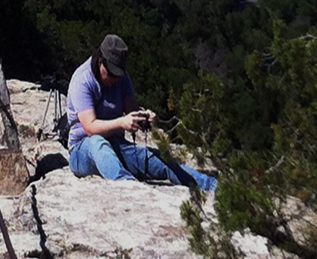
Photog At Work by michael horodyski on 500px.com
Photog At Work by michael horodyski


1. Watch Your Exposure

Being careful with your exposure likely is one of the most important techniques when taking amazing pictures. Most cameras however were made to already be very skilled at calculating the right exposure levels, especially if the lighting of a scene is even.

However, under certain light conditions, the camera could easily be thrown off. That is when you must need to step up your game and take control of the situation.

If a photo is dark, it means it is under-exposed, and when it's too bright it is over-exposured. Practice controlling your exposure, and your photos will always look perfect.

It is also worth understanding your white balance. To begin with you can just check your environment and select a white balance setting that matches it. Is it sunny? Use the sunny setting. Is it cloudy? Use the cloudy setting etc...

2. Compose Your Frame

Composition of pictures refers to the things located in a frame. These objects can be the subject, the foreground, background, and anything else which may appear in the photo.

Understanding proper composition in photos is a crucial technique to perfect when creating top-notch images. Fortunately, there's a simple method you could follow when first learning what composition is.

This technique is called "Rule of Thirds". It isn't an obligation to employ it when taking photos, but it can help enhance the structure or composition of an image making it more interesting to the eye. The most important element in a photo should be located within these areas, or in the area where these lines intersect.


Portrait - Rule of thirds and Fibonacci spiral by Marco Ciofalo Digispace on 500px.com
Portrait - Rule of thirds and Fibonacci spiral by Marco Ciofalo Digispace


3. Work With Motion Blur

Blurring motion in pictures is a very fun effect that can make a simple photo look extraordinary. Plus, perfecting this technique will even allow you to learn how to gain total control on your camera's shutter speed.

4.  Master Bokeh

Bokeh is basically the quality of blur in out-of-focus parts of a photo. Bokeh can be obtained by simply controlling the depth of field in an image. This depth is the distance between the farthest and nearest elements of scenes that are in-focus. Deep focus means everything in your photo is sharp. Where shallow focus means only one specific area of the image will be sharp.

5. High Dynamic Range

HDR is a technique of capturing a range of shots between the lightest to the darkest areas of a scene (the dynamic range). You will need to employ AEB (Auto Exposure Bracketing) to make this work so you will also need a tripod.

Taking HDR photos is a little challenging at first, but it's a great skill to practice. You'll have to work the images together post-processing the images to achieve the final result. So it is also a smart introduction to use Photoshop or any other imaging software to do this - photomatix being one of the most popular.


Light and Dark by Steve Huskisson on 500px.com
Light and Dark by Steve Huskisson


photog
Author Eric Cross
Eric Cross is a budding photographer who balances his time taking photographs with time spent writing about taking photographs, putting together a free guide for everyone wanting to learn about trick photography and special effects. 


Article Source: 5 Essential Techniques in Photography
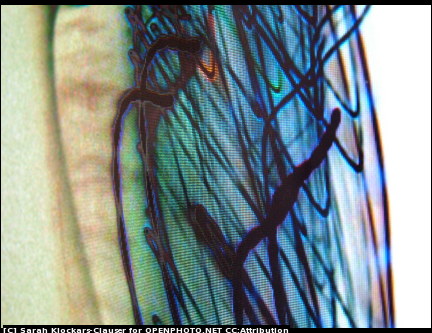
pixelation light color abstract scribble art inversion abstract image
light grafiti © Sarah Klockars-Clauser

A fairly liberal and impulsive approach to photography, somewhere in between painting and classic photography, abstract photography is a versatile form of art.  As with most creative activities, you will apply your imagination using the camera to evoke images from within the environment.  Wherever you may go, wherever you may look you might just find an image to take a shot of and turn into abstract by a process of enhancement.  Use of zoom lenses, filters and different digital settings can give you a real opportunity to play with the image you have captured.  You may also want to manipulate the photo in a photo editor like Photoshop or Instagram, or just leave it the way that it is.


Many abstract photographers hold to the idea that macro hides inside micro and use their camera lens to focus on the details creating a new subject from out of the larger whole.  What may be a small part becomes epic in scale in the photograph. With the focus literally upon it looking closely enough you can find some things that immediately catch the eye or are easily recognized familiar concepts.  Sometimes it is the items with the least attractive surfaces, with their complex forms and patterns, which often produce the most striking images. It is a matter of removing the context and drawing out the particular qualities you want to highlight. In this manner, partial shots of rusty metal, rubbish bins, old walls with peeling paint and cracked tiles– any kind of surface and texture usually ignored – suddenly become subject matter for abstract photos.


abstract image of rusty waves
Waves of Rust © Einarspetz
To create photo abstractions you can use both digital and analog cameras.  You can apply the rule of thirds, The Golden Ratio, or break all the rules and do as you please.  In the arena of abstract art, this is all fair game.  The first objective should be to react with your environment, see what draws you in deeper.  Instead of backing up and spanning around for a panoramic photo, this is a time for finding the details that might seem hidden in plain sight.  Or alternately, it may be you have to go inside or to the bottom of larger objects to find what it may hold inside.  This is much like a treasure hunt, the hunt for artistic photographs.  And here I feel I have introduced a topic which can very easily be a fun activity for anyone to try, especially if you have a digital camera handy, try composing your own abstract art photos. See if you can find something interesting or maybe even spectacular to the point that you wish to hang it in your home.  Here is one I did with my smartphone and added a “watercolor” effect in my photo editing program.   Hope you have learned something and perhaps have found a fun new art activity.


abstract door jamb, abstract image
An ordinary object zoomed in close.


© Rebecca H Knight, images used are © their respective owners. All rights reserved.


Brian Kielt is a Visual Artist living and working in Northern Ireland with painting, drawing and photography. His practice in Figurative, Neo-Expressive art revolves around personal experiences, mythology and a sense of mortality/fragility. Brian creates artworks in oil, charcoal, pencil, pastels, photography and mixed media.


Painting, mortality, brian kielt
Fractum,  2013  © Brian Kielt 
Tell me how you began creating in your current medium:

I first used Oil when creating a painting in school at 14. Since being used to only acrylics or watercolours, there was definitely a learning curve. It began as mud and then slowly the realisation came that cleaning and preparation was half the battle with Oils. I first experimented mixing Oils with other medium when I was halfway through my Fine and Applied Arts course in Belfast in 2007. I haven't looked back but I'm still constantly pushing the materials and developing my practice with them.


How long have you considered yourself an artist?

3 years. During university I always felt I was in a bubble and so the 'art student' tag fitted me perfectly. Once I left university I was forced to stand on my own two feet, find a studio, sustain my practice and apply for competitions; which is when I felt that my professional Artist career began.


Painting, mortality, brian kielt
Exspecto,  2013  © Brian Kielt 

What things inspire you to create art?

People mostly. We are fascinating. The figure is usual extremely prevalent in my work. Memory and experience go hand in hand in my opinion and so they jump in from time to time, especially when an experience triggers a said memory or vice versa.

What are you trying to convey through your art, and what does it mean to you?

The fragility between life and death. Mortality interests me a lot because I lost quite a few close friends and family members over a short period of time and it was a dark point in my life. This time still haunts and inspires me at the same time. I try to figure out why it scares and excites.


Painting, mortality, brian kielt
Beth,  2013  © Brian Kielt 

Tell me about influences, if any:

Francis Bacon is a massive influence on my work. He blew open what it was like to explore the human condition through the medium of paint. Gerhard Richter, Hughie O' Donoghue, Paul Nash and Edvard Munch also spring to mind immediately. There are so many influences beyond painting as well.

Photography can trigger an idea for a painting or a large-scale drawing quicker than a painting by someone else because you can immediately see what you would do in your own style, your stamp; rather than deciphering someone else's paint/handwriting and then building it up again.


Local artists are a huge inspiration to me. Eoin McGinn, David Lee Badger, Louise Younger, Craig Donald and Gemma O'Hare came through the same university system with me so I have had the privilege of seeing their work from day one; watching it develop and grow. We all feed of each other's creativity so the idea of a bubble in university has lingered on in some regards!


Painting, mortality, brian kielt
Opacare,  2013  © Brian Kielt 

Tell me about your creative process, from the beginning of a work to its completion:

It usually begins with a found image or maybe a quick 5 minute sketch of someone/something. I either blow the sketch up on a projector or develop it from hand onto the painting surface (varies from canvas to board). Then layering of charcoal drawing, washes of turpentine and oil paint repeats itself until either it is finished or I can go no further that sitting because I will destroy the work if I try to fix it. If I cannot finish it in one sitting, I let it stay on my wall for a week and begin another. If inspiration still hasn't come after a week I hide the painting for a month and then take it out to view it with fresh eyes. The layering process either begins again or I wipe the image clean and start another.

What exposure have you had?

I won a competition for the Stendhal Arts Festival in 2011 for a portrait of a fellow Artist. I have since had several exhibitions in Belfast: Culture Night Belfast 2011 & 2012, Ulster Bank Arts Festival and Opening Exhibition at the Muse Gallery in December 2012 to name a few. I had a review about my work recently in an online magazine which was great!

What is the most annoying remark made to you about your art?

There have been a few but the one that sticks out the most was "So, when are you going to get a real job?" It took a while to laugh my way past that one.

Do you have any regrets in your life as an artist?

I don't really believe in regrets but perhaps being more disciplined than I can be at times.


Painting, figurative, brian kielt
Silvis,  2013  © Brian Kielt 

What plans do you have for the future of your art?

I'm in the middle of organising my first solo exhibition for the end of this year; there is Culture Night 2013 in September in Belfast where I and fellow Artists are planning something a little different to the usual proposals. Generally I hope to gain more exposure for my work which will enable me to continue my practice and develop as an Artist.

Do you have any advice for emerging artists?

No one ever knows it all. We are all constantly learning so the one thing I would encourage for anyone starting off is to keep an open mind in all areas of your work and to create something first instead of questioning it. If you ask why before it's even made, then there is no point in making it in the first place.

I try to sketch for at least an hour each day. This loosens your brain up and a little mark here or there can lead to something else.

How do you promote your art both on and off the internet?

I'm one of the founding members of the LOFT collective, a group of emerging visual Artists based in Belfast's city centre. Together we enhance our individual practices - ranging from painting, sculpture, photography, web design and many more - as well as collaborate on group projects and exhibitions. Twitter for LOFT collective is @LoftBelfast

I have open studio days where the public can come up to view my work and see my process. On the internet I use my blog, Facebook and Twitter primarily although I'm also on LinkedIn.

Have you sold any of your art, if so how?

I have sold several pieces, mainly through the group exhibitions I have been involved in.


Painting, figurative, brian kielt
Solatium,  2012  © Brian Kielt
How should people find you online...

I have my portfolio, blog, C.V. and more on my Artist Website and can be reached or followed on Facebook and Twitter: @BKieltArtist. There is also a link for the LOFT collective.


all images ©Brian Kielt 
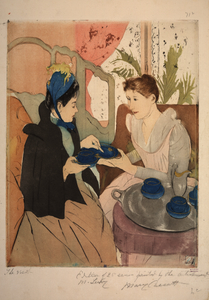
Developed in the 1860s early impressionists broke the rules of then established academic painting. They began by giving colors and shades primacy over lines. Radicals in their time, they set out to recreate the sensation in the eye that views the subject, rather than simply recreating the subject. The rise of the impressionist movement is often considered a reaction by artists to the newly established medium of photography.


Afternoon tea party. Digital ID: 1266694. New York Public Library
Afternoon Tea Party. Mary Cassatt


Bazille, Frédéric - Chailly
Chailly. FrĂ©dĂ©ric Bazille

Initially photography's presence seemed to undermine the artist's depiction of nature and their ability to mirror reality. Both portrait and landscape paintings were deemed somewhat deficient and lacking in realism as photography produced true to life images in a quicker more efficient fashion. The photographer taking fixed or still images through the reliable film exposure process challenged painters as a new way of capturing reality.

One of the key factors to keep in mind when looking at art of this style is the lack of fine detail.  This is due to the emphasis of impressionists to portray the overall visual effects instead of details. Short, thick strokes of paint are used to quickly capture the essence of the subject. They abandoned traditional perspective, and avoided the clarity of form which was previously how paintings were distinguished as having greater and lesser elements in a picture.  This has resulted in many critics accusing impressionist paintings of looking unfinished or amateurish. The perception of such critics is enlightened by understanding the meaning of the word impression: “an idea, feeling, or opinion about something or someone, especially one formed without conscious thought or on the basis of little evidence” - Oxford dictionary (American English).  Impressionism draws on the senses not so much the sensibilities.

The use of color is also an important key in identifying impressionist works. The Impressionists loosened their brushwork, and lightened their palettes with pure, intense colors. Colors are applied side-by-side with as little mixing as possible, creating a vibrant surface. Impressionists used mixed and pure unmixed color, not smoothly blended or shaded as was customary, in order to achieve the effect of intense color vibration. The optical mixing of colors is intended to occur in the eye of the viewer. Grays and dark tones are produced by mixing complementary colors. In pure impressionist paintings the use of black paint is avoided.

Edouard Manet - Grand Canal Ă  Venise (1874)
Grand Canal in Venice. 1874 Edouard Manet
"There are no lines in nature, only areas of color, one against another."-Edouard Manet

Impressionist painters purposefully took the act of painting from the studio to the outside world changing the effect of light in their paintings. Previously most still-lifes and portraits as well as landscapes were painted indoors. The impressionists found that they could capture the transient effects of sunlight in the moment by painting en plein air (outdoors).  

Using the en plein air technique, shadows are boldly painted with the blue of the sky as it is reflected onto surfaces, giving a sense of freshness and openness not captured in other types of paintings. Blue shadows on snow are the effect said to have inspired this technique. Painting in the evening produces effets de soir - the shadowy effects of the light in the evening or twilight. The evening lighting would look no different from the mid-day when done with the subject indoors instead of outdoors.  Lighting is an important element of impressionism, not all paintings are done en plein air, however, it is highly regarded by purists.


Garden scene by Renoir
Garden Scene in Brittany. 1886 Pierre-Auguste Renoir


"If the painter works directly from nature, he ultimately looks for nothing but momentary effects; he does not try to compose and soon become monotonous."-Pierre-Auguste Renoir
Another factor to look for in impressionist paintings is how the paint was applied. Impressionists do not exploit the transparency of thin paint films (glazes) which other styles of artists build up carefully to produce effects. The surface of an impressionist painting is typically opaque. Wet paint placed into wet paint “alla prima” without waiting for successive applications to dry produces softer edges and an intermingling of color. The paint is often applied impasto which has a thick texture that seems to be oozing out from the canvas.


Sailboat landscape art
RĂ©gate Ă  Argenteuil. circa 1872 Claude Monet

As outlined in this article impressionist paintings can be determined by taking into consideration the following key factors:
  • lack of high detail with boundaries blurred suggesting a three-dimensional plane, rather than a clearly realistic depiction 
  • colors not smoothly blended yet close attention paid to the reflection of colors from object to object
  • the play of natural light is emphasized
  • use of thick brush strokes producing a nontransparent finished painting  


images used in this essay are public domain. Courtesy: The New York Public Library and Wikimedia Commons

Author: Rafal Maleszyk Fine Art Photos  
satchel, portfolio


It takes a lot of determination and persistence before you can call yourself a fine art photographer. Like every passion and profession this one is no different. It is a very unique hobby, hard to define, measure or describe. Success in art always has been hard to define, it is something you cannot measure in money or quantity and quality is hard to define too. Here are some things you will have to do before you will be recognized as fine art photographer...

1. Build a strong portfolio that is original and artistic. 
You will need to take art or photography courses and decide what it is that you like the most. When you find it that will be the first great step, sometimes hardest to achieve. After you decide what gives you the most satisfaction, you will start creating strong work. Some people are fortunate enough and do not need schools, they acquire their knowledge by experimenting, reading and analyzing. 

2. Submit your photos to contests, fellowships, awards and grants.
There are thousands of places where you can submit your work online. Prepare carefully, read the rules and understand what the judges are looking for. Your work can be exceptional but remember, you have to submit only the pieces that follow the guidelines. The biggest mistake you can make is to submit work that does not fit the topic of the contest.

3. Find fine art magazines and journals.
Editors are looking for great work everyday, yours can be the one that they have been waiting for. Find magazines that feature work that is in the same genre of your work. It will take hundreds of magazine submissions before you will be accepted but trust me, the first publication will feel great. It will be easier to find magazines that are available online only, those places are not limited by the number of pages, the cost of print is zero so they can include 100 pages or 200 pages without raising the cost of production, as long as your work is strong and original you have a high chance.
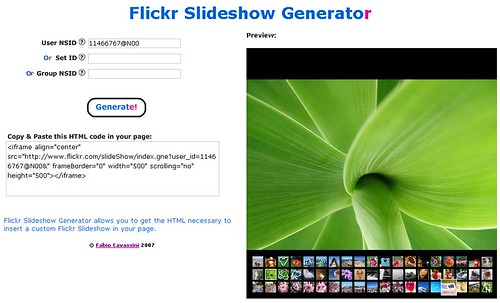
Flickr Slideshow Generator
Example of a digital Fine Art Photography Portfolio online.


4. What is a strong portfolio?
Your portfolio will be a collection of your photographs that have something in common. If you have many strong images that show very different topics, divide your portfolio into series of photographs. This kind of portfolio with a common topic is strong are highly appreciated because it can make a bigger impact on a viewer and is much more difficult to create.
Faukner Jan portfolio 2010-00009
Images with a common theme
 make a stronger impact.

5. Find an art gallery.
When you complete the above you are ready to show your work in art gallery, select carefully, do not be desperate, art gallery managers take advantage of artists all the time. There are no clear laws protecting the artist, as a matter of fact there are no laws at all. Art galleries have been in business for long time and if you are new to it, they will feel it. Do not be desperate, if you do not feel 100% confident that your work will be properly represented do not come into agreement with the gallery just for the reason to have your work shown. There are better places where you can expose your work. Always sign a contract.

6. Submit your work to museums.
This is one of the highest rewards you will find at this point, when your work is shown at a museum or included in the permanent exposition. This will raise the prestige of your work and help build your carrier.

About the Author
Rafal Maleszyk is a fine art specialist, his work has been awarded and published in numerous magazines; Silvershotz, LensWork, Camera Obscura, Black & White Magazine. 

Article Source


photographer practicing tight framing

The subject must be prominent in a photograph and easily recognized by the viewer. The viewer does not want to be searching around the picture to find the intended subject. Directing attention to where you want it in a photo can be done by detaching the subject from the background and the unnecessary elements that can distract the viewer. A few simple methods are described below that can help you emphasize the subject in your photography:
  1. You can make tight framing on the subject being photographed which will result in many of the background elements being removed from the scene minimizing the risk of your subject being lost. If you have a zoom lens you can make a tight frame with it from a distance of your targeted subject. With a fixed lens you will need to get up close to your subject to “magnify” it. You will notice that by tight framing, the detail in your subject is greatly enhanced and will draw the viewer’s eyes.
  2. A second method to draw better attention to a subject is to walk around it until you find the simplest background. The background must be in opposite contrast with the subject to create a good visibility between the two. A simple background without disorderly elements or too many distracting colors is recommended for both portrait photography and for other objects or scenes being photographed. If there is not an appropriate background around your subject, then you can simply try to change the camera view angle to a lower or higher position to discover the right background such as a blue sky, green grass or even leaf foliage.  Sometimes you may provide your own background if it is possible in the given circumstances.
  3. Framing is a technique that photographers can use to direct the viewer's attention to the subject of the scene. Many elements or even people can be positioned around the subject to create a frame within the image area. Separating the subject from the rest of the image using a frame will accentuate it more clearly. For example, you can frame a broad landscape between some trees rather than taking a picture with an over-simplified and boring composition. It is important that the elements used as frames do not distract the viewer's attention from the subject. If the framing elements relate to the image theme the effect will be more pleasant. Framing correctly can create an illusion of depth or a sense of the image being in 3D. Besides all the aforementioned pluses to framing a photograph, it is a technique often used for hiding unwanted details in the background or foreground of a picture. 


A photographer can define what is visually striking about a particular photo subject by utilizing tight framing to get closer, controlling and manipulating the background and using complementary elements to create a frame within the picture. Everything that is around us can be the subject of a photograph. Photographers should search and select a clear composition that will transmit a message.  If properly done an image can touch a viewer emotionally.


© Rebecca H Knight, images and media used are my own or © their respective owners. All rights reserved.


Today while randomly perusing art sites, I came across LACDA -the Los Angeles Center for Digital Art.  This institution shows exhibits and holds regular international contests for digital artistry.  Upon further research I discovered that this digital art museum is one of many (just Google "digital art museum" - you will see what I mean). 


“Digital art defines the contemporary” it says at the head of one of the paragraphs on their site.  How well that could have once been said about photography and even colored glass was at one time a technical advancement that found application in art form. This really got the gears going in my head thinking about digital art in a different way, within a new context.


Digital Monumental, Digital Mural at LAX Depicts Vast Los Angeles Skyline
"The Dream Decor of Oblivion"
Monumental, Digital Mural at LAX Depicts Vast Los Angeles Skyline
Artist: Susan Logoreci , 2011


Digital art originated in the 1970s and therefore could be described as fairly new which plays into how it is not embraced as traditional art, in a sense. Some suggest that it takes away from the artist's essence, that it falls short due to the lessened physical interaction the artist has with the medium. However, if one were to try to discount the digital art process by saying it is easy as if assembling something with step-by-step instructions that would be an incorrect viewpoint. A digital artist utilizes many different traditional skills during their creative process. The digital artist sculpts a subject, much the same as how figure is sculpted with clay. Then color and texture is added the same way a painter would for a traditional painting. Lighting and angle must be represented as if using a camera for photography, adjusting for the desired effect. Everything taken into consideration, it would seem that one cannot be just simply able to manipulate digital, but know how to do so with a combination of artistic skill sets.


By R. L. Passman
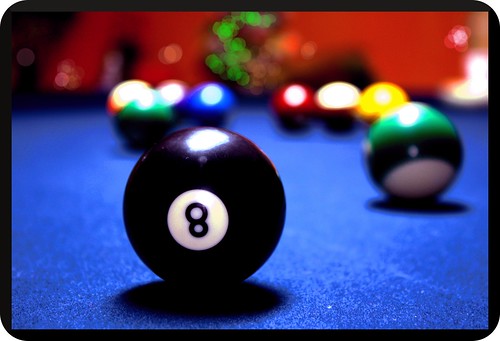
048/365 Bokeh Billiard
In this digital photography tutorial I discuss the technique of isolating the subject matter of your photograph using the focusing technique of bokeh. Bokeh is a Japanese word that roughly translates as the aesthetic quality of the blur. The technique uses depth of field to isolate a subject against a background that is out of focus. The subject matter is in sharp focus thereby emphasizing the subject while hinting at a sense of place without specificity.

I often use this technique while photographing out of doors, especially when I want to isolate a flower or plant in an otherwise cluttered environment. Because I want to 'see' the subject as the main piece of the photograph, I use any one of several approaches available to me to capture the essence of the subject.
Pink flower petals, bokeh
Public Domain CC0

Using Macro Rings

One technique is to extend the placement of the lens relative to the image capture medium using extension tubes. The effect created by extending the lens relative to the 'film' is to absolutely isolate the subject against an otherwise blurred background while magnifying the subject to reveal hidden detail. I find using extension tubes and a long lens is ideal for picking up nuanced detail in the interior of flowers, when photographing insects (when they agree to sit still for you) and other subjects where exploded and enlarged detail provides a visual impact that is otherwise missing.

When using macro rings, a tripod is an absolute requirement. The front of the lens is place quite close to the subject and your ability to hand hold the camera, focus and shoot is close to impossible. The steady nature of the tripod allows you to do all that is required to make a powerful, engaging image.

Using Depth of Field
Carlos Delgado image of Canon EF 70-20mm  f2.8 lens
Canon with f2.8 lens
 Photo credit: Carlos Delgado
CCASA3.0


Often in the field I shoot with a 28-105mm f2.8 lens. When choosing to isolate a subject I open the lens up fully and use the longest available focal length. I choose a position that is close to the subject, although I need not be so completely on top of the subject so as to scare away any insect life that might be feeding on the flower. I focus on the subject letting the background fall off into a blurry amalgamation of blended color and a resulting graphic design. Steadying the camera on a tripod is also needed to assure a steady hand.

The difference between the long lens wide open and the extension tubes is one of degree of magnification. With the long lens the subject appears more natural, less magnified if you will. In terms of isolation, the whole purpose of bokeh there is no significant difference.

In terms of impact, either extension tubes or long lens solutions are an interesting way to provide your viewer an experience of isolation of subject matter which, in fact, mirrors what the eye actually sees as we focus on objects close to our eyes. It is my sincere hope that you enjoyed this digital photography tutorial on bokeh.


Roger Passman is an award winning professional photographer located in Northern Illinois. He often leads creative photo workshops designed for beginning through intermediate amateur photographers. He regularly exhibits his work throughout the Midwest at juried art fairs and gallery showings.
 Article Source
Once you have made a website to promote your work, how do you make sure to get noticed? SEO - Search Engine Optimization – is the key to accomplishing this, and it is not hard to get started.  


computer, marketing, online SEO
Illustration of Global Reach or the Concept of Doing Business Globally Via the Internet
By: Carol & Mike Werner  Click to Purchase Print

This article will cover five simple methods to make your website come up in search engine results such as Google. When someone searches your name, a title of one of your works, an exhibition or groups you participate with, etc. use these easy SEO tips to increase your search engine hits:

  • Image File Names: Make sure that the images of your art on your website are descriptive or actual title names.  Make sure to change the default names that load from your camera such as "DSC_00123.jpg" by giving it a descriptive name instead. For example if the image is of your handcrafted ceramic horse sculpture, rename your image file to "Ceramic Horse Sculpture Art.jpg." This will make the image label readable for search engines which classify file names and the image of your horse sculpture in this case would come up in image searches.  The more specific the name is, the better the search-targeting will be.  There are meta-tags for images which are more advanced, and if you are html savvy using these to add your name or other specific information to images will improve your SEO even more.
  • Keywords: Every page on your website and every post on a blog should include relevant keywords and phrases. If you have a "Resume" or “CV” page, you may wish to attach keywords such as: series, shows, exhibits, artist resume, or other keywords to describe the region you are in or type of work you do.  Other important keywords can be specific to your publisher, print master, shop, artist collective, venues or galleries you have been involved with. Every web-hosting site has different criteria for how to include keywords so look up your site’s FAQ's for details such as how to insert, or what the maximum keywords allowed per page is, etc.
  • High Quality Content: With the search algorithm updates from the leading search engine Google: Panda, Penguin, and Hummingbird  - you want to understand that the quality of the content of your webpages will factor in ways that go beyond just including some of your select keywords in the text. You do not want to be overly redundant using the same phrasing in every paragraph, post or caption.  Writers tend to have improved odds as compared to a visual artist with pages that include mostly media images and videos on gallery or portfolio page. Include captions for each image giving the title and medium and a short description or meaning of that artwork if possible which can help improve SEO. Search engines will target frequently used words found on every page of your site in order to determine categorization. If your website is about oil painting, be sure that word "oil painting" is in the content of multiple pages of your site.
  • Linking: Social media networks that you use should be linked to your website.  Depending on the layout you may wish to isolate these to your profile page, or include it in the footer, header or sidebar. Search engine results are higher-rated for websites with links on other strong sites and social media such as Twitter or Facebook are some of the strongest. It is also wise include a few outgoing links on your website to pages that add value for your visitors in similar interest categories for example, you may have a links page with your favorite art blog, online community, group, or e-zine listed (for instance: iouart.blogspot.com). 
  • Interconnectedness:  A sometimes overlooked or underutilized form of optimizing your search results is in the word-of-mouth category.  This is basically making sure to “link” the offline with the online.  Make sure that your website has in the URL words that always appear in your promotional materials which will help set you apart from other similar pages. This goes into branding a bit, but for a quick case-review: instead of “Marty’s Fine Art Photography” use instead a more succinct “Martin Smith-Jones Art Photography” on both website and business cards.  This would keep searches from pulling every Marty that has photography or fine art online and would help someone who wants to see more than your main page which would be advertised, or stick in their mind in case they lost track of the flyer or card and just Googled instead.

These are just basic ways of improving your web search results, so if you want to go further feel free to delve into advanced SEO help articles, or pursue the help of a search optimization specialist.  More than ever before the search engine is a tool many are using for everything from questions, shopping ideas, advice searches to finding things to do in their area and beyond.  And the ability to pinpoint and drive people to your artist or writer pages is in your hands.  Be specific and make sure to deliver quality content that will set you apart from the vast crowds of creatives online. With time and patience you can make your place on the web easier to find with just natural relevant content to your page and updating and adding more of it will continue to build your SEO.


© Rebecca H Knight