Latest Posts

By Eric Cross

There is a famous quote that alludes to the idea that a picture is worth a thousand words. Well, while agreeing with this quote, it is essential to state that a well taken photograph is worth much more than a thousand words. Indeed, an excellent photo has the ability to not only express beauty, but also store the fondest of memories. Photography is an art which requires skill and technique. To help you gain the necessary skills, here is an article outlining 5 basic ideas for photographers.
    Red squirrel interested in a camera
    photo: Peter Trimming
  1. Acquire the best camera
    It is quite hard to talk about ideas for photographers without mentioning the camera; for it is the device through which photos are taken. Cameras come in various sizes, shapes, color and most importantly resolution powers. There is no doubt that technology has revolutionized the photography industry because it has spearheaded the manufacture and production of high resolution cameras which have the ability to shoot crisp-clear photographs. Therefore, the first and most essential idea to great photography is to ensure that you are equipped with a powerful camera.
  2. Detail
    Taking a great picture is about capturing that particular detail which will make the difference. Every photo should be taken with absolute creativity to ensure that all the details are captured. Even when there appears to be no outstanding detail, try to look closely and you will certainly find one. Just like drawing a picture to represent a thousand words, creativity goes a long way in delivering a memorable photo.
  3. Light
    Cameras directly depend on sufficient lighting to produce excellent shots. While this is not to say that photos cannot be taken during the night or in dark places, it is important to confirm that light is an integral element of photography. If you intend to take photos in locations where natural lighting is alien or limited, you have to use an artificial lighting source such as electricity to increase your chances of taking a beautiful picture. Although technology has brought us powerful cameras which are capable of independently taking photos in dark locations, you have to keep in mind that the trick here is to shoot great pictures with these 5 great ideas for photographers.
  4. Background
    Almost always, a great photo has an amazing background. Here, two aspects of photography come into play; instant and selective. There are times when you have to take photos without having the option to change locations or backgrounds for that matter. A case in point is when you are taking photos of people attending a certain ceremony. You are required to make use of your creativity and alertness to produce high quality picture, but when you have the freedom to choose from various backgrounds, be sure to go with smoky or watery backgrounds as they bring the best out of a photo.
  5. Photo framing
    Of these 5 ideas for photographers, photo framing is definitely the easiest to implement. This is largely because framing the photo adds a touch of creativity and design to it. Different photos require different frames for them to be great. You need to exploit the use of various frames to determine the most suited to fit on a particular photo.
In conclusion, there are numerous tips, but the outlined 5 great photography photo ideas will give you a perfect start to taking awesome pictures! Once you master these basics you can start looking towards more advanced techniques like trick photography and special effects.

photog
Author Eric Cross
Eric Cross is a budding photographer who balances his time taking photographs with time spent writing about taking photographs, putting together a free tutorial guide for everyone wanting to learn about trick photography and special effects. 

Article Source


Naomi Bradleigh
What inspired the name of your series "Starbreaker"?

I stole the name from a song by Judas Priest, from their Sin After Sin album. It sounded suitably badass for a weapon capable of killing demons from outer space - instead of just destroying their avatars.

Like I said in part one of this interview, "Stormbringer" was taken. I'm already too close to writing "Elric on a Harley" for comfort.

What's your typical writing session and environment like?

I'm a lunch break novelist. I bring a laptop to work with me, and drive down the street to a nearby pizza parlor to eat a slice of pizza and belt out a scene. On a good day, I manage between 500 and 1500 words of raw text in about an hour.

I'd love to be able to write at home after work, but I rarely manage it. After a full day as a software developer, my brain shuts down once I come home. I'm more likely to curl up with my wife and read, play video games, or mess around on the net than I am to write.

When I'm writing, I put on headphones and try to find music that suits the scene and character I'm trying to write. My playlist usually includes music by Iron Maiden, Iced Earth, the Blue Oyster Cult, Judas Priest, Queensryche, Bruce Dickinson, Iced Earth, Nightwish, Without Temptation, Delain, Nemesea, Blind Guardian, The Worshyp, The Protomen, Savatage, Black Sabbath, Therion, Joe Satriani, Megadeth, Dream Theater, Coheed and Cambria, Ayreon, Symphony X, Nobuo Uematsu, and Shoji Meguro.

I tend to turn off wifi when writing. I don't think much of Jonathan Franzen's fiction, but I suspect he might be right about the difficulty of writing good fiction while jacked in.

The Milgram Battery

Tell me about influences, if any:

I'd have to be especially arrogant to claim complete originality, free of any influences. However, when you ask any novelist to name their influences, you impose upon them a nigh-irresistible temptation to claim a part in the literary traditions of the authors they most admire, while omitting any mention of authors they despise.

I'd love to claim that I draw upon European Romanticism and the daring SF and fantasy for which such authors as Michael Moorcock, Roger Zelazny, Stephen Brust, Robert Heinlein, C. J. Cherryh, C. S. Friedman, and M. John Harrison are justly famous. However, I might not have proved as successful in escaping the shadows of Tolkien, Donaldson, Jordan, and Goodkind as I hoped.

An accurate account of the influences on my work is a task better left to critics, and not to novelists seeking to promote their own work.

What is the most unexpected reaction you have had to your writing?

My writing is how I've met every woman with whom I've been intimately involved, including my wife of nine years, who I courted for four. Catherine and I met on a Yahoo! forum for aspiring fantasy writers, and started out by reading each other's work. It's a long story, and perhaps beyond the scope of this interview.

Do you have any regrets pertaining to your writing?

I sometimes suspect I picked the wrong trade for a day job. Software development gave me valuable technical skills, as well as experience I used while writing Starbreaker, but it's a bad trade for writers. The demands on one's time and intellect often leave little time or energy for writing, even when I avoided working in Silicon Valley and in start-ups in favor of taking jobs involving government contracts which should only require a forty hour workweek.

Aside from that, I have no regrets. I needed to do something with my life, and writing gives me a sense of purpose. It allows me to indulge all of my nasty little control-freak tendencies without actually hurting anybody.

What plans do you have for future work?
Ashtoreth

Without Bloodshed, the first Starbreaker novel, comes out in about a month or so. Curiosity Quills Press is currently doing a new cover. I'm working on The Blackened Phoenix, as well as a short piece called "Tattoo Vampire". For Christmas, I've started kicking around some ideas for a story called "Cardigans" in which we'll see a young Morgan Stormrider knitting. I'm thinking of expanding a novelette, Steadfast, into a full-length NA science fantasy novel starring Naomi Bradleigh called Silent Clarion. I also have to plot and eventually write the last two main-sequence Starbreaker books: Proscribed Construct and A Tyranny of Demons.

After that - let's just say that chronicling the life and crimes of Imaginos could be a lifetime's work. I could write a Michener-style epic about Nationfall, the social/political/economic collapse that sets the stage for the rise of the society in which Starbreaker is set. I can do with Starbreaker what Tolkien did with Middle-Earth, only I cheat by taking our world and screwing around with history.

What is the best advice you want to share with aspiring authors?

This first bit should be obvious, but for the love of all the demons ever venerated by humankind, READ. Read your chosen genre. Get acquainted with its tropes and cliches. Figure out what readers expect, so you can screw with them if you want to. Once you're done reading within your genre, read outside it. You might find ideas and elements you can import into your chosen genre, and exposure to different styles and voices will help you develop a richer style of your own.

Half of what you hear about building an author platform is arrant nonsense, but I can't tell you which half. I've had people tell me Google+ is a waste of time, and that I should use Facebook and Twitter instead. I ignore them, because I've tried Twitter and Facebook. Twitter is the men's room wall of the internet. Facebook is how the Daleks will justify our extermination. Google+ is where I found my audience, which is currently about 18,000 followers. Maybe a tenth of them will bother to buy my book, but nobody builds an empire overnight.

Some people will tell you that fanfic is a good way to develop your technique, but I don't agree with them. I think working with an existing setting and existing characters makes it harder for writers to learn how to develop settings and characters of their own. Instead, I recommend the pastiche. Instead of taking Kirk and Spock as is, and working around them, use these characters as templates for new characters of your own creation if you lack the confidence to start from scratch.

I'd suggest learning a bit about computer programming. You don't have to do it for a living, and I lack sufficient sadism to suggest that aspiring writers take on software development as a day job. It's thankless work, and frequently makes writing unnecessarily difficult. However, learning to code requires learning logic, which serves writers as well as it does mathematicians, scientists, and programmers.

Be ruthless in pursuit of your art. Defy everybody who opposes you, and never give them time to discourage you. The converse is also true: acknowledge and treasure everybody who has ever supported you. If you're lucky enough to have a lover or spouse who's willing to help you, don't screw up that relationship.

How do you promote your work both on and off the internet?


Christabel Crowley
I've focused the vast majority of my promotional efforts online, especially on Google+. I got my publishing deal by posting bits and pieces as I wrote them. Afterward, I'd talk about the plot as I worked on Without Bloodshed. I'd also post dialogue stripped of narrative context using hashtags like #ShitMyCharactersSay.

Since I'm a metalhead, and music is incredibly important to my writing, I also make a habit of posting YouTube videos of songs that helped me develop some aspect Starbreaker, and discuss why these songs matter to me.

I worked with artist Harvey Bunda of Gunship Revolution, commissioning portraits of several of my major characters. I use this character art in posts about my work and characters.

I help promote other independent writers and musicians, recommending their books and music. Sometimes they ask, and sometimes I come across them, check them out for myself, and decide they're worth mentioning.

I also comment on current events, especially if they apply to the Starbreaker setting for some reason. For example, when Google Glass was first announced, I linked it to Witness Protocol, a technology in the Starbreaker setting that allows people equipped with implanted computers and the appropriate software to record everything they see and hear.

What are your favorite writing tools?

My laptop runs CrunchBang Linux, and I tend to write my drafts in plain text files formatted with a markup language called Markdown, which I can convert to HTML and other formats using freely available tools like pandoc. When I'm ready to submit a piece for editing and publication, I use LibreOffice, which can cope with Microsoft Word's formats and includes "track changes" functionality.

I also run a dict server on my laptop, which allows me to get definitions and synonyms by typing a command into a shell prompt, such as "dict bazooka". Because I write my drafts in plain text, I can use any text editor I choose, even heavy duty programmers' editors like vim and emacs. I currently favor an app called PyRoom, an open source clone of Hog Bay Software's WriteRoom app for Mac and iOS. It's a full-screen plain text editor, which allows me to focus on my writing without distraction.
Claire Ashecroft
Because I run a Unix-based OS, I can use the OS itself to organize my work. I have a documents directory, just like you Windows and Mac users. In it, there's a "starbreaker" directory. In that "starbreaker" directory I have directories for each story using the Starbreaker setting. For novels like Without Bloodshed, the directory consists of a file containing the title named "00.title.md" (.md for Markdown files); a "scenebreak" text file consisting of a blank line, a line with three asterisks, and another blank line; and a directory for each chapter, named so that the OS orders it for me: "01.theunforgiven", "02.norefugebutaudacity", etc. In each directory, I have another "00.title.md" for the chapter number and title. I also have a file for each scene whose name is based on the order in which the scene occurs, and the viewpoint character's name, such as "01.morganstormrider.md", "02.naomibradleigh.md", etc.

I can then put it all together using a small shell script written so I can use it to convert any story I write into a single file for conversion to standard formats. It uses the "cat" (concatenate) command. If I want word counts for scenes, chapters, or the entire story, I can use the "wc" (word count) command. If I need to do a find, I use "grep". If I need to do a story-wide find/replace affecting more than one file, then I use "sed".

I started using Linux in 1999, after my first computer (an secondhand IBM PS/ValuePoint running PC-DOS 6, if anybody cares) died by my hand. I was trying to swap out the hard drive when my cat bit my toes to get attention. This startled me, and I ruined the computer by driving my screwdriver straight through the main board. I had to build a new one, I didn't want to keep running DOS and writing, I didn't want to pay a hundred bucks for a copy of Windows 98, and I couldn't afford a Mac. So I bought a copy of Linux on CD (Red Hat 5.2, if anybody cares), installed it, and alternated between writing and tinkering.

Since my day job involves software development on Windows, I trust Microsoft's offerings as far as I can throw them. Macbooks are nice, and I used one from 2006 until 2012, but overpriced for the hardware you get inside the pretty case. And if George R. R. Martin can keep using WordStar 4 on DOS, why shouldn't I use Linux?

Is there anything else you would like to share?

I think you and your readers are thoroughly sick of me by now, but you might also be interested in interviewing some other independent authors whose work I enjoy and recommend: Michael Shean (the Wonderland sequence), Lynda Williams (the Okal Rel saga), K. H. Koehler (the Nick Engelbrecht series), Charity Bradford (author of The Magic Wakes and Stellar Cloud), and Michael Reeves-McMillan (author of Realmgolds).

However, if I might beg your indulgence a bit longer, I'd like to mention that while Without Bloodshed is not yet available, I do have a story entitled "The Milgram Battery" available in the Curiosity Quills Primetime charity anthology. Five bucks gets you twenty short pieces of weird fiction, and ten percent goes to reputable no-kill animal shelters across the United States.

How to find Matthew Graybosch online...
author in new york, matthew graybosch
Available on Amazon:


You can also try conjuring me, but the last person to try squiggled a line that should have been straight while drawing his summoning circle. The poor schmuck ended up as a chew toy for the Hounds of Tindalos. So it goes.


So you may have heard about the Free Art Friday Movement and now you are wondering - what is the point? Aside from just being nice, why do artists do this?  Here is what I have gathered from those I know who have participated.

It is an opportunity to share art with others removing the financial and time constraints from the transaction. It allows people who would not otherwise be able to spend money, or who are perhaps unable to make it to local art shops or shows, the chance to still own a piece of art. The connections of the local artist with their local art lovers and the ability to bring them together in an unimposing public space are a reward in itself. 

The accessibility is unconditional. When the internet is incorporated there is the magic of bringing the artist together with their locals initially from and then away from the internet which is another great connection. It is not unheard of for a public hand-to-hand Free Art Friday transaction to occur either. An artist can strike up a conversation and talk about their art and if they see the other person have a true interest, offer their free art piece. 


copper rings intwined my world your world inside background pier and copper railing
My World Reaches by asboluv


For the most part, it is simply FUN. And at the end of the day both parties are happier for it. The artist knows that something they created has a home with a philanthropic association. It makes for a great story, so the art and artist are going to be talked about. It is much like a free sample. It serves as a fun activity, like a game, which gets you out and about searching for art-treasures hidden in public places. 


To find out more about this art movement in your area, I suggest doing a search for “free art Friday (name of your city).” This movement has rippled all over the world, and sometimes involves a group decorating a public area together all at once or sometimes it is held on different days. "Free Art Night" is about as popular as Free Art Friday. It is NOT an exclusive group or movement - Anyone is welcome to join in. 


To learn more about the Free Art Friday Movement Click Here.

Brainwave entrainment or "brainwave synchronization" are methods aimed to induce brainwave frequencies to fall into step with a stimulus with the same frequency. Alpha, theta and delta are slow, and in the slower frequency ranges the right-brain and left-brain communicate better. This would allow both macroscopic "big-picture" and detail-oriented thought processes equal consideration. It can also bring harmony to ideas of logic vs. emotion. When awake and alert, a pure theta state is not possible, but there are ways to get the brainwaves to alpha and theta together both relaxing the brain and turning it on.

Illuminated image of a person's head  By: Carol & Mike Werner
Illustration by: Carol & Mike Werner


Binaural beats or isochronal tones are a highly regarded sonic form of brainwave stimulation. Music with steady beats, especially with layers of pulses will tune brainwaves to theta. This is possible because the brain has a "frequency following" response to aural provocation. There are also visual stimuli that can create specific brainwave response. For instance here are combined audio-visual entrainment video examples on Squareeater - for theta waves I would recommend trying out the Lucid square. Use headphones.

Sensory deprivation tanks, or float tanks, allow for an extended theta state experience. Letting go and exploring a different state of consciousness can be a way to let the mind truly wander, completely withdrawn from sensory input. Up until the age of six our primary mental activity is done in theta which explains flashbacks to early childhood memories occurring while in the float tank. If you opt to try sensory deprivation, take a means of recording your immediate ideas that result as you may not hold onto them for long similar to the difficulty of recalling a dream once awake. In our daily lives we are bombarded with overwhelming sensory agitation so a float tank is the opposite extreme that can help to open the mind to internal instead of external ideas. Of course you cannot actually practice artistic endeavors while in the tank; the benefit you get is the state of serenity and the ideas that you hold onto directly after.

Runner's high or the sense of elation felt during vigorous athletic activity or physical exertion is another way to experience a theta state. Other examples of ways to achieve theta are with self-hypnosis and practiced meditation. Although meditating helps people find long periods of theta, this can take the better part of a lifetime to learn how to accomplish.


Illustration Showing the Attributes of Left and Right Brain Activity in Humans
Illustration Showing the Attributes
 of Left and Right Brain Activity in Humans
by Carol & Mike Werner


With the aid of the theta brainwaves we can break outside of the limitations of the physical senses and expand or shift our perception of reality. Everyone can train their brains to awaken a latent ability and believe in boundless possibilities. In doing so, creative people can surpass their mental blocks and pick up the tools of their trade and materialize something inspired from the realm of the imagination.

To read more about how theta brainwaves affect creativity Click Here.

Today I am so excited to introduce you to Helene Ruiz, an acrylic painter based in the United States. At the age of 57, she is not certain the exact moment she began to use her medium of choice - acrylic paints. She does recall this story tracing back to her childhood:

"My father always taught me to think creatively and he himself was an artist. When I was a kid and wanted colors I extracted colors from comic strips, nature, coffee, teas, etc. My first painting kit was not actually purchased until I was about 11 years old when my father took me to Pearl Paint in Chinatown, Manhattan and bought me watercolors and brushes, of which I still have some of the brushes for memory's sake. I played with them until I discovered oil paint, which I found each time I used it - I would get sick.  Apparently I am allergic to them. So then, when I used acrylic for the first time, I fell in love with them. They were perfect for me! The fact that I paint a lot and live in a small space makes acrylic a perfect match for someone like myself, since they dry so fast." 

Acrylic painting on black background with two clowns dancing around sad face balloon with heart hanging in center
Send in the Clowns, © Helene Ruiz

Jester or fool garbed sleeping or dead character reposed in yellow bathtub with heart outside of chest on black background
Expired Fool, © Helene Ruiz


Helene is working on a collaborative project with artists all over the world, that I find so very fascinating. This interview will delve into that in detail since it is an event taking place Now.  If you are an artist who wants to participate, find out how by reading on. First, let's get to know Helene Ruiz, the artist, a little better - she assures me there is an entire book's worth of uncharted stories within her...

Would you tell us about your most memorable artworks? 

I have used so many materials... it is actually difficult to say which would be my most memorable pieces. I suppose those are the ones I do to try and show what is unseen. I try to express my take on life and how I perceive life's take on others as well. Anything can trigger me... environment, politics, love, pain, illness, etc

What has been the most unexpected thing that has happened in relation to your creating art? 

Funny, I find this question here, especially now at the end of April 2015. Because just about a month ago, on March 28th, I almost lost my life and was rushed into emergency surgery. I am still recovering and doctors say it could be six months before I actually do recover fully. I have another surgery to go through in June to put me back together again so I can feel human. So, this experience, right now, is the most challenging of all life's events thus far!  Only today have I attempted to begin to sketch out a painting... it will not be easy. I will be forced to do it in small steps, but it will be the first since March 28th. For me, I usually do at least two or more pieces per month, so this has been a long spell of not creating art for me. 

[GFDL or CC BY-SA 3.0] via Wikimedia Commons


The aim of these five tips is to help you talk about your artworks, and sell them. Artists anxious in regards to speaking about their art should definitely pay heed to these ideas presented in this article. Many artists find it is not easy to discuss the meanings and themes within their artworks due to the personal nature of the artistic process. However, it is the artist’s own story that is most compelling and intriguing when it comes to their own art. So, in order properly promote you own artworks it is imperative to keep in mind that buyers wish to understand the art they add to their collections.

  1. If you hope to effectively speak about your art, first write down what your art is about. The exercise of writing forces one to articulate what goes on in your creative minds. Include whatever is important to you processes. If you feel that your story must tell how you came to work in your current medium, what your primary techniques are, who influenced your work, if you use themes, what your art education is, or who has taught you methods and skills that you use now then include these things and anything else that comes to mind when thinking of your art.  Putting this information down on paper will help you find what points you wish to emphasize in telling the story behind your work.

Talented author Gorg David Huff of Austin, Texas has agreed to an interview to tell us about his adventures in writing.  This is a road not traveled alone and he reveals to us how others have affected his writing career along the way. Rather than be a man of many trades, he decided to put his all into writing and it has become his life's work.
1636: The Viennese Waltz (The Ring of Fire) Gorg Huff
Book #18 in the multiple New York Times
 best-selling Ring of Fire series


What is your genre? 

Now that's a question that is subject to interpretation. If you mean writing, painting, sculpting, music, then it's mostly writing with a bit of cartography and some painting. As to type of writing, it's science fiction, mostly alternate history, but also magic and space opera. The painting is mostly impressionism to abstract.

What can you tell us about "Ritter" in particular?

A decent respect for the opinions of mankind compels me to define Ritter. A ritter, in this case, is not a German knight, but a writer who can't spell. Not being able to spell, as you might imagine, makes the writing process somewhat more difficult. It makes or made for most of my life, being published not just impossible but unthinkable. Even now with the literally amazing advances in spell checking, I'm still close to unpublishable without my co-author Paula Goodlett, who can spell as well as find the many and varied other errors that creep into anything I write.

How long have you considered yourself a writer?

From the moment someone paid me for a story. In my case that was the publication of "The Sewing Circle" in the first Grantville Gazette electronic version. If I recall correctly, I was paid two and a half cents a word. The paper version of GGI was published in 2004, so the electronic magazine was probably in '02 or '03.

For a while I wrote about the writer’s life, noting its ups and downs and the lessons learned along the way. You can read about them in the Essays menu but some of the most popular are: My Real Writing Life and The Real, REAL Writer’s Life and Final Thoughts on a Writer’s Life. During my time away from blogging I continued to learn writing’s tough lessons, ultimately surviving what I now refer to as the Writer’s Black Hole.
image from youthvoices.net

image from youthvoices.net
In the posts mentioned above, I was very honest about my struggles. I had thrown myself into writing, trying to learn the craft and the business aspect at the same time. Like most, I sacrificed a lot--money, family time, energy and sanity to move the mountains necessary to succeed at this thing. The more I pushed to ‘make it’, running around like a possessed chicken without its head, two things were happening: 1) I was burning out, and 2) I was beginning to accept that success doesn’t happen overnight, no matter how hard I wished it to. Notice I said accept. See, I’d already realized that truth on a brain level but not at an emotional one, and the latter is where the magic happened this time around. Both points were excruciating to swallow.

Online art galleries are very important modern tools for artists in addition to traditional offline art displays. Uploading art images to online art galleries is a prime opportunity for otherwise little-known artists to establish a presence on the internet. Before the internet came to be widely used as it is today, art viewing and purchasing was limited to local showings of an artist's work with some exhibitions that would travel city-to-city. Aside from the in-person method, artists also have long used catalogs that show works from various artists made available to the general public. These methods are still good practice and getting out and taking your work to shows is always a positive, yet, the artists are limited in the number of people they can reach and the length of time their art display will circulate. A very important point to consider is that when using offline methods much of the control shifts into the hands of curators and gallery owners and the entire process therein is subject to be approved or rejected by them. 


Example: A Singular Creation Member Galleries

It has been over a year since our first interview, when Tanya Davis was first expanding her creative work from sculpting and painting figurines to applying the same skills onto vinyl platforms. After all this time and
Penguin Engineer steampunk drawing penguin wrench watercolor pencil
Penguin Engineer by Tanya Davis


checking in regularly, there has truly been no pause in her actively making new art. In this interview I will attempt to bring our readers up to speed with her latest artistic endeavors.

How far has your experiment with vinyl platforms taken you?

It is still going and I am still trying different platforms. Most recently, I am tackling going larger. Outside of the initial MunnyWorld brand, my most successful work done on blank vinyls has been the Google Android mascot and Zukie bases. My most recent droid is a Penguin Engineer based on an illustration I created by the same name.
Penguin Engineer Droid Tanya Davis android figurine
Penguin Engineer Droid by Tanya Davis


Illustration, that is something new.  How did you get into that type of art?

It was more about me practicing drawing and also giving my hands a break from sculpting. Aside from chiefly commission figurine work, illustrative drawing and painting is my main art form right now.

Since the beginning of 2014 which one of your illustrations is your personal favorite? 

My Penguin Engineer because it is the first original character I created that has a completely developed background. It was done free-hand from start to finish on the illustration board without any transferring. It was also the first one I did with the Derwent watercolor pencils. This illustration is currently available in limited edition signed watercolor prints done by local printer Mindzai Creative. Right now (mid-June 2014) there are 18 left. I have them on hand when I publicly show my work or you may obtain this print here.

Texas Quilt La Grange Mural Art courtyard
Mural on the outer wall at the Texas Quilt Museum
After a recent visit to a local quilt museum, I feel an enhanced awareness of the artistic work of quilters even though I had already known it to be an art form. Quilting experienced developments boosting the skill to a fine art as recently as the 1970’s and 80’s. Today there are active collectors of quilts old and new.  

The place I visited, currently the only quilt museum in the American Southwest, was the Texas Quilt Museum. I am not able to share pictures from the exhibit as photography is not allowed inside, but there is a lovely courtyard with a mural of quilts that I did capture a photo of in the main image here. They house a selection of antique, historical quilts in one area; however, the main halls showcase a themed exhibition much as you would expect to see at an art gallery. From the start of my tour I saw modern works with subject matter not typical to what I had seen in quilts before, such as savanna animals depicted in unusual hues of pink and works with photography and mosaic elements included. The proper lighting and orderly fashion of the general presentation relayed how seriously this art is taken. As my group explored the displayed works it quickly became apparent to us that modern quilters are using a wide array of materials beyond fabric alone.
Joshua Mason is a painter who studied Fine Arts at Gwen Frostic School of Art and currently lives and works on the coast of Southern Michigan with a summer studio in Northern Michigan. He teaches painting and likes to emphasize the field as an artifact of spontaneity in his lessons. This summer Joshua is teaching a workshop exploring found materials and land art. 
"I like to create my own interpretation of the projects or lessons alongside my students. What I enjoy most about teaching is the atmosphere of active creation as a group."
Materia Forma - Riverside I


Tell me about your first experience painting:

My mother used to paint crafts and nick-knacks and some of my earliest memories are sitting on her knee watching the brush go back and forth. Another early experience was a book by Werner Haftmann called Painting in the Twentieth Century. 

At what point in your life did you come to consider yourself an artist?


By Edward Ashcroft-Hamilton 

Calligraphy is not simply writing but more a type of stylized writing. It is important that a beginner understand this concept well to calligraphy write the letters. It is a process of putting different letters together to form a perfectly patterned and well placed set of angles and letters.

The difference between normal writing and calligraphy writing is that when you calligraphy write you literally draw your letters artfully, rather than just write your letters. Calligraphy writing requires a certain amount of adherence to styles and form in writing. It is necessary that the beginner studies the shape of each letter thoroughly and considers them as pictures rather than letters, or as a collection of pictures rather than a collection of words, meant to represent an idea.


Western calligraphy
Western calligraphy by Alliance française de Wuhan

Needlework artists use needle and thread in creating their art similar to how a painter uses brush and paints. This kind of work is also often referred to as needlepoint, cross stitch or embroidery. This time-consuming art produces treasured pieces that may be passed on as family heirlooms. As with paper art, textile art needs to be protected from acid-burn which will yellow the fabric over time. It is important to always use acid-free boards and adhesives.
Cross Stitch - Flower Fairy
 Flower Fairy by Stephanie Clifford (CC BY 2.0)

Properly mounting needleart requires knowing the right method for doing so to maximize protection of the work to be framed. There are readily available books on how to frame needle art. This article will cover two of the simplest methods: quick mount board and pinning. For a more detailed explanation and other needle art mounting techniques, here is recommended further reading: Needlework Framing Volume 3 by Vivian C. Kistler.

Quick Mount 

The easiest method for mounting needle art is using an acid-free quick mount board. In quick mounting the edges of the needle art are attached to the back of the board with adhesive. There are some quick mount boards claiming the fabric may be lifted and re-applied indefinitely. Remember, if the adhesive becomes permanent with time, this mounting method will be irreversible, therefore your piece could be ruined if disassembled. For valuable antique needle art be wary of this method, as the results of using pressure sensitive adhesives is still questionable. Some of these boards come with batting attached to the board. Be sure the batting is heat bonded, if it is not, it may migrate and push through  through the surface of the needle art causing what is called a "beard."

Sample of watermark to lower value of image
source: wiki user Canoe1967 
When a potential customer lands on your site, you want them to engage, browse, click around and ultimately convert to a sale. That is pretty simple to achieve, right? Well, hang on a minute, and read this quick article to make sure you are avoiding using conversion-killers. These are some seemingly harmless things that we can unknowingly be doing to sabotage our own success online, and here they are. Read on to see if you are using anything that can kill your conversions.


Watermarks ON Your Images

When you are selling your art you do not want to obscure the actual image with your @ or .com or copyrights.  When looking at any retail sales papers, catalogs, magazines or websites do you see them watermarking all over their photos? Although there is a possibility that people would use your photos without permission, the people that do that generally don’t care whether it’s watermarked anyway. So if you must put anything on it try to include it in the image name, such as jamesculverpaintingblueturtle.jpg or maybe a website or attribution name below the image if you can include a white space around the digital. That can help with tracking for you and for people that may see it shared on social media and wonder who made that? The exception to the rule would be a watermark which was semi-transparent enough to not mar your images, and show that you are serious about protecting them. As far as what I have heard artists say, the general rule to follow when putting your images online is not to upload high-resolution. Only make the resolution high enough to look good on a computer screen, not one that looks brilliant if they were to take it to the print shop and order a professional print on their own.

Auto-Play Music

When a visitor “bounces,” that means they left from the same page they landed on. So they did not see anything else on your site!  A high “bounce rate” can be directly associated with auto-play music. It is much like trying to find a nice spot at the beach and someone next to it has a boom box blaring and therefore the search continues.  So, do your visitor and yourself a favor and avoid having a soundtrack on your website. This goes for musicians too!  Let your fans pick what audio files they want to hear by you, saves them the hassle of finding the stop or mute button when they don’t want to have the soundtrack you have chosen playing at them.

Loud / Obnoxious Color Schemes

The colors you choose for your site should not take precedence over your great presentation of your work. Important information is best represented on white or light-colored backgrounds. It is possible to be too dark, it can make your visitors automatically disinterested. If you have different galleries for series of your art offerings you may want to have complementary colors for those.  A certain level of uniformity is important though, so that your site visitors do not feel like they have left your page accidentally.

Animated GIF Images

GIFs images are fun for personal enjoyment but they do fall short of professionalism. Customers that are serious about browsing your artworks for possible purchase are not looking for a cheap giggle. This means no dancing llamas, baby sloths, or otherwise hilarious animated GIFs should be displayed on your site; unless, of course, you are an Animated GIF artist…

Some of these things, I am sure you thought "well that is simple, of course I avoid those faux pas!" Maybe there is something I covered in this piece that you did not realize could jeopardize your e-commerce art business. It is best to avoid these aforementioned things in order to make a better impression on potential customers who visit your site to view your art.  

Maybe you have some ideas that were not covered here?  If so please feel free to mention them in the comments section.

Author: Rafal Maleszyk Fine Art Photos  
satchel, portfolio


It takes a lot of determination and persistence before you can call yourself a fine art photographer. Like every passion and profession this one is no different. It is a very unique hobby, hard to define, measure or describe. Success in art always has been hard to define, it is something you cannot measure in money or quantity and quality is hard to define too. Here are some things you will have to do before you will be recognized as fine art photographer...

1. Build a strong portfolio that is original and artistic. 
You will need to take art or photography courses and decide what it is that you like the most. When you find it that will be the first great step, sometimes hardest to achieve. After you decide what gives you the most satisfaction, you will start creating strong work. Some people are fortunate enough and do not need schools, they acquire their knowledge by experimenting, reading and analyzing. 

2. Submit your photos to contests, fellowships, awards and grants.
There are thousands of places where you can submit your work online. Prepare carefully, read the rules and understand what the judges are looking for. Your work can be exceptional but remember, you have to submit only the pieces that follow the guidelines. The biggest mistake you can make is to submit work that does not fit the topic of the contest.

3. Find fine art magazines and journals.
Editors are looking for great work everyday, yours can be the one that they have been waiting for. Find magazines that feature work that is in the same genre of your work. It will take hundreds of magazine submissions before you will be accepted but trust me, the first publication will feel great. It will be easier to find magazines that are available online only, those places are not limited by the number of pages, the cost of print is zero so they can include 100 pages or 200 pages without raising the cost of production, as long as your work is strong and original you have a high chance.
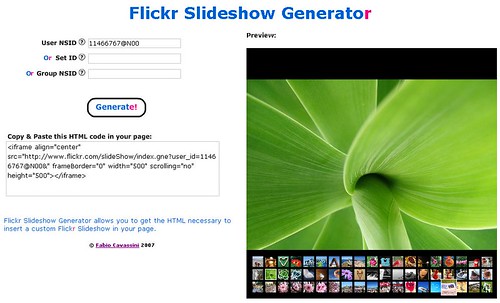
Flickr Slideshow Generator
Example of a digital Fine Art Photography Portfolio online.


4. What is a strong portfolio?
Your portfolio will be a collection of your photographs that have something in common. If you have many strong images that show very different topics, divide your portfolio into series of photographs. This kind of portfolio with a common topic is strong are highly appreciated because it can make a bigger impact on a viewer and is much more difficult to create.
Faukner Jan portfolio 2010-00009
Images with a common theme
 make a stronger impact.

5. Find an art gallery.
When you complete the above you are ready to show your work in art gallery, select carefully, do not be desperate, art gallery managers take advantage of artists all the time. There are no clear laws protecting the artist, as a matter of fact there are no laws at all. Art galleries have been in business for long time and if you are new to it, they will feel it. Do not be desperate, if you do not feel 100% confident that your work will be properly represented do not come into agreement with the gallery just for the reason to have your work shown. There are better places where you can expose your work. Always sign a contract.

6. Submit your work to museums.
This is one of the highest rewards you will find at this point, when your work is shown at a museum or included in the permanent exposition. This will raise the prestige of your work and help build your carrier.

About the Author
Rafal Maleszyk is a fine art specialist, his work has been awarded and published in numerous magazines; Silvershotz, LensWork, Camera Obscura, Black & White Magazine. 

Article Source
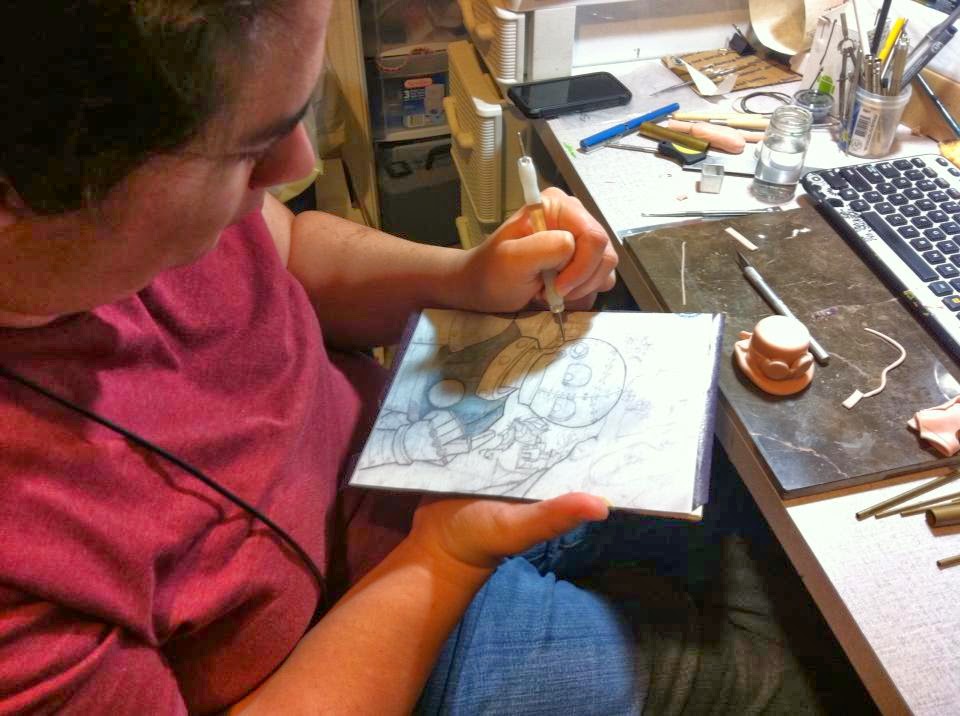
pen tool being used for carbon paper transfer
So you have drawn something into your sketchbook or on loose scratch paper that you wish to transfer to either illustration board or better paper, but you aren't sure if you can do it free hand again? I have a solution for you that I learned in one of my drafting classes in college. This process is best for transferring onto paper or illustration board; I have not used this process on anything else. I have also only used it for small images. The largest size has been 8.5 x 11 inch, however, art and drafting stores will have larger sheets of Carbon paper if you want to go larger.

This technique is also helpful when you have traveled from home or don't have a nifty light box for tracing.


Materials needed

  1. Image you want to transfer
  2. Carbon Paper - find at craft or office supply stores; the sheets are reusable and 1 package can last for many years
  3. Drafting dots or tape specific to painting - for easy removal
  4. Embossing pen tool
  5. Eraser
  6. Pens (if inking)
three images showing how the carbon paper transfer occurs with the resulting image.
Tracing with embossing tool (top), close-up detail
(middle),transferred image (bottom).


  • Take your drawn image and make a photocopy of it. This way you can change size easily and position it on the desired paper easier.
  • Place a sheet of carbon paper darker side down and set it aside, but not on your target area yet. Carbon paper is also available in white which is useful if you are transferring to a black or simply darker target.
  • Trim the excess paper from around the copy of the image.  
  • Using the drafting dots take the copy of your drawing to the carbon paper.   Remember the dark (inked) side should be lying on the work surface.
  • Now position the carbon paper gently onto your chosen medium. Gently place tape to at least two corners so that it is secure.

*Do not rub or press too hard on the image as this will transfer*


  • Without pressing too hard trace your image with the embossing pen tool.  It is best to plan where you are to start and what path you will take. This way you can be sure to transfer the whole drawing. You can lift the paper to also see progress as you go, but try not to do so too often because you could accidentally move the image the image. When done remove the carbon paper. If inking by  hand go ahead and do so using the eraser to get rid of transfer lines. I use a gum eraser for my work. It doesn't leave smears or residue. They also work better at taking up lines.

*If you press too hard during the tracing they will NOT erase - be GENTLE*


  • At this point if you want the final artwork to be painted -  just paint.

Although there are many different transfer methods, this is one that I have been adept with since my days in architecture classes. This is easy, fast, without needing much space or set-up ahead of time and it can be done anywhere. I like to share information about tools and materials I use.

I hope you have enjoyed this tutorial and if you have any questions feel free to ask!


All images © Tanya Davis