By Eric Cross
Photography can be a very difficult thing to master, as there are so many different sorts of techniques that not many are aware of. Fortunately, with a ton of practice and a lot of hard work, any beginner photographer can become the best they can be.
Photography is way more than just taking pictures, it is a form of art that requires patience and a lot of creativity. Without these two factors, you will become just another photographer trying to making it in this huge industry.
With the simple advice below, you can maybe get to become a photographer that exceeds the skill and talent of all the other photographers out there.
Before you even start to get serious you absolutely must have a decent tripod...

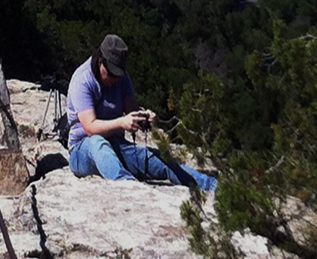
Photog At Work by michael horodyski |
1. Watch Your Exposure
Being careful with your exposure likely is one of the most important techniques when taking amazing pictures. Most cameras however were made to already be very skilled at calculating the right exposure levels, especially if the lighting of a scene is even.
However, under certain light conditions, the camera could easily be thrown off. That is when you must need to step up your game and take control of the situation.
If a photo is dark, it means it is under-exposed, and when it's too bright it is over-exposured. Practice controlling your exposure, and your photos will always look perfect.
It is also worth understanding your white balance. To begin with you can just check your environment and select a white balance setting that matches it. Is it sunny? Use the sunny setting. Is it cloudy? Use the cloudy setting etc...
2. Compose Your Frame
Composition of pictures refers to the things located in a frame. These objects can be the subject, the foreground, background, and anything else which may appear in the photo.
Understanding proper composition in photos is a crucial technique to perfect when creating top-notch images. Fortunately, there's a simple method you could follow when first learning what composition is.
This technique is called "Rule of Thirds". It isn't an obligation to employ it when taking photos, but it can help enhance the structure or composition of an image making it more interesting to the eye. The most important element in a photo should be located within these areas, or in the area where these lines intersect.

Portrait - Rule of thirds and Fibonacci spiral by Marco Ciofalo Digispace |
3. Work With Motion Blur
Blurring motion in pictures is a very fun effect that can make a simple photo look extraordinary. Plus, perfecting this technique will even allow you to learn how to gain total control on your camera's shutter speed.
4. Master Bokeh
Bokeh is basically the quality of blur in out-of-focus parts of a photo. Bokeh can be obtained by simply controlling the depth of field in an image. This depth is the distance between the farthest and nearest elements of scenes that are in-focus. Deep focus means everything in your photo is sharp. Where shallow focus means only one specific area of the image will be sharp.
5. High Dynamic Range
HDR is a technique of capturing a range of shots between the lightest to the darkest areas of a scene (the dynamic range). You will need to employ AEB (Auto Exposure Bracketing) to make this work so you will also need a tripod.
Taking HDR photos is a little challenging at first, but it's a great skill to practice. You'll have to work the images together post-processing the images to achieve the final result. So it is also a smart introduction to use Photoshop or any other imaging software to do this - photomatix being one of the most popular.

Light and Dark by Steve Huskisson |
Eric Cross is a budding photographer who balances his time taking photographs with time spent writing about taking photographs, putting together a free guide for everyone wanting to learn about trick photography and special effects.
Author Eric Cross

Article Source: 5 Essential Techniques in Photography