Latest Posts

Showing posts with label editorial. Show all posts

So you may have heard about the Free Art Friday Movement and now you are wondering - what is the point? Aside from just being nice, why do artists do this?  Here is what I have gathered from those I know who have participated.

It is an opportunity to share art with others removing the financial and time constraints from the transaction. It allows people who would not otherwise be able to spend money, or who are perhaps unable to make it to local art shops or shows, the chance to still own a piece of art. The connections of the local artist with their local art lovers and the ability to bring them together in an unimposing public space are a reward in itself. 

The accessibility is unconditional. When the internet is incorporated there is the magic of bringing the artist together with their locals initially from and then away from the internet which is another great connection. It is not unheard of for a public hand-to-hand Free Art Friday transaction to occur either. An artist can strike up a conversation and talk about their art and if they see the other person have a true interest, offer their free art piece. 


copper rings intwined my world your world inside background pier and copper railing
My World Reaches by asboluv


For the most part, it is simply FUN. And at the end of the day both parties are happier for it. The artist knows that something they created has a home with a philanthropic association. It makes for a great story, so the art and artist are going to be talked about. It is much like a free sample. It serves as a fun activity, like a game, which gets you out and about searching for art-treasures hidden in public places. 


To find out more about this art movement in your area, I suggest doing a search for “free art Friday (name of your city).” This movement has rippled all over the world, and sometimes involves a group decorating a public area together all at once or sometimes it is held on different days. "Free Art Night" is about as popular as Free Art Friday. It is NOT an exclusive group or movement - Anyone is welcome to join in. 


To learn more about the Free Art Friday Movement Click Here.
If you are reading this, chances are you know an art snob.  There is nothing new about snobs, they have always existed and are found everywhere. Some are of a specific type and some stand out more than others. All the same, as I am starting out in this article, know that snobbery is common and nothing special.  So nobody should be upset by this article, except maybe a few vulgar snobs, as I draw focus on the particular traits and behaviors of the art snobs and how they serve the betterment or detriment of artists. In the course of this ranting editorial you may sort out for yourself if you the reader are an art snob. Also, if so what of it?  

The basic definition for a snob is “a person who believes himself or herself an expert or connoisseur in a given field and is condescending toward or disdainful of those who hold other opinions or have different tastes regarding this field.”(Dictionary.com)  Art snobbery is demonstrated in ungracious intolerance of creativity that does not conform to a narrow set of parameters.  Said parameters are usually along the lines of “your art is not as good as mine.” Art is art, how good it actually is has to depend wholly on opinion.  To pioneer into new ways of creating art or to make truly exceptional art, one must not be afraid to leave the safety zone.

Now there are also art snobs of the deeper variety.  The metaphysical types that believe all art has to have a message or symbolic meaning or else it is just decoration.  These type snobs seem to take all the fun and joy out of artwork.  It is true for some of them there must be a poem hidden in the imagery represented. There is nothing wrong with this principle, but to expect it from every artwork as a qualification of being true art, well if they cannot find the beauty in something simple that is their loss really. It would seem to me an exhausting level of snobbery to maintain.
elitist photo:  elitist.jpg
Now, art snobbery does not stop there, there are those snobs that have reached the pinnacle and can look down in disdain on an entire medium. Glassworks are a common target of the run-of-the-mill art medium snob.  Just because it is not what they use it is their mind that glass is not a legitimate artistic medium. I am sure you can think of a few odder notions among the snobs who are ever-grumpy about other peoples’ art medium choices.

If you have had enough exposure to the art community you know there are traditionalists that cling to their old trusty methods and mock any newer options as a lesser way of making art.  Think: Oil vs. Acrylic paint, Film vs. Digital photography, Acoustic vs. Electric musical instruments, all Visual Art vs. Digital art.  Sometimes there is concern with the removal of the pure human interaction with their physical work. There is something to be said for this, even though it is in our nature to embrace always new technology and art will reflect this.  But when painters mock watercolorists as only producing under-paintings they are admitting their minds are stuck in the time period when that was all that watercolors were used for.  If they don’t see true art in watercolor then they are showing a blindness in their snobbery. Another example would be photographers who give others working with green-screen backgrounds a hard time when really their snobbery is based in a rejection of using technology.  And in an instance where the newer digitally produced six-color giclee printing produces finer results than standard four-color lithographs, even though the newer printing from digital is better, this is not how a litho-snob would see things.

There is yet another type of art snob who will merely glance at pictures on the walls, with a rude and hateful expression as if they smell something bad.  This is really the type of snob that makes me wonder why they even bother showing up.  When it comes time to share their opinions, a snob will always consider that anyone that does not share the same skills automatically has invalid opinions about art.   Knowledge or expertise on the subject is the only thing that matters in their minds.  Some snobs will go so far as to tell other artists what to do with their work, or even say that a piece is “unfinished’ in their eyes. Art snobs feel that they possess additional senses or insights superior to “ordinary” people.  This translates as the snobs thinking they are the only ones with exclusive appreciation of what makes a true work of art.

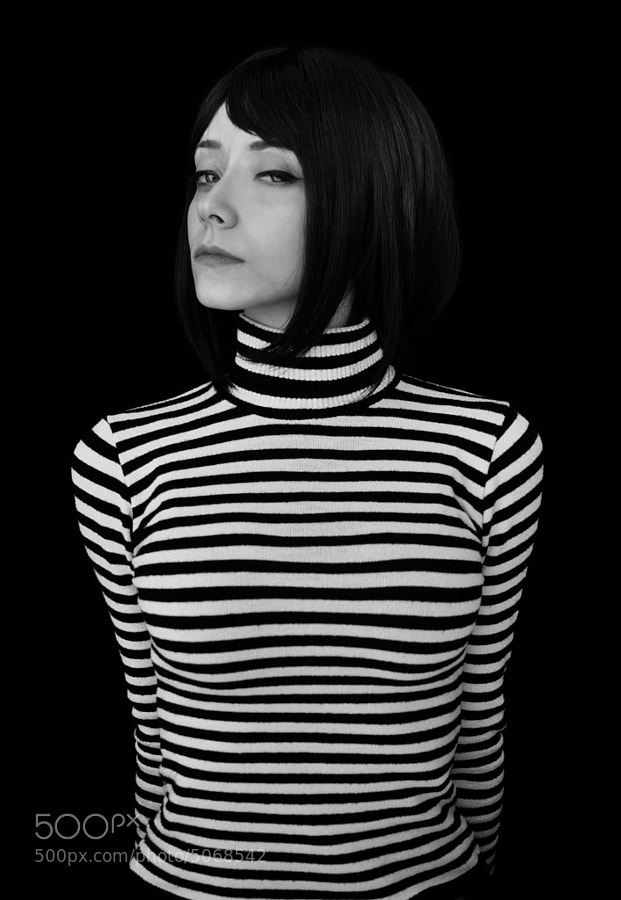
Photograph snob girl by volkan kovancısoy on 500px
snob girl by volkan kovancısoy on 500px
WINE SNOB
photo: Pedro Ribeiro Simões on Flickr

Another thing that typically upsets an art snob is when the term “style” is used to describe the work of an artist.   Saying “approach” in place of saying “style “is the snob-tell here. The art snob enjoys immediately correcting someone stating an artist demonstrates a specific style by affirming that it is not style but reaction and approach to subject matter. They get in quite a tizzy when they hear the word “fine” art as well.  This is like a presupposition in their minds. This kind of self-righteous opinion can only come from a self-perceived walking encyclopedia of art. Otherwise, I can simply put it: they are mincing words, and not very well.

There are cliches among the art snobs; it is a bit like a group of severely opinionated art-gangsters. They are often seen wearing turtle necks with tight pants, have extreme contempt or admiration for French Artists, believe they hold such expertise as to never be impressed with any contemporary art pieces and usually have a background in wine snobbery – that could be the introduction to snobbishness.


Ultimately, the defining trait of snobs is that they are imitators. They adopt certain manners and world-views of a social class of people to which they do not by right belong. Snobs crave being members of an elite group and close ranks to those who do not conform.  So despite their rude behavior the snob is a pitiful, insecure person.  How do they serve the art world with their pretentious airs? A person who knows they are an expert does not need to patronize or act condescendingly towards others. The good bit that I draw from the existence of art snobs is this: they deliver a point for sake of comparison. As an artist it is important to believe in yourself and find reassurance in the fact that you're not just a sheep following the herd making the same art everyone else is making.  Even though they think they are special, the snobs represent the herd or herd-mentality, and without them, artists would lack a refined example of how NOT to be.


sheep photo: sheep sheeppage.jpg
There are some that think that if they just had the talent to be a great artist then they would automatically become rich overnight.  Apparently these folks have never heard the term “starving artist” or really taken a good look at the tragic and destitute lives of some of the most posthumously renowned and treasured artists in history.  It is difficult to understand how on earth a financially impoverished artist could even afford materials to create their art.  Artists with wage-earning jobs only creating their work part-time often end up putting what money they receive from sales back into sustaining their ability to continue their art projects.  That is at least a self-sustaining scenario and the art is still being created and enriching the world – if not the artist.  The point I am taking to task here is that financial security does not kick in automatically just from producing art.

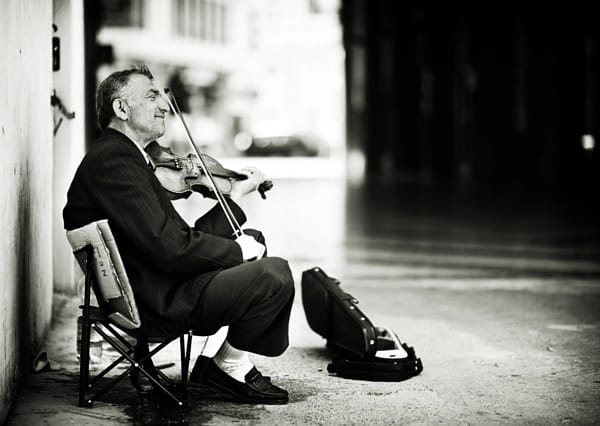
Arte en todas partes by Manuel Orero on 500px.com
The music is first, the busking is secondary.
Arte en todas partes by Manuel Orero

As a part-time artist, writer, or musician with a full-time job there is the ability to pursue creative endeavors supported by the additional steady income. However, there is also a hugely negative factor within this arrangement. The time and energy put into earning income from a regular job not only detracts from someone’s creative efforts, it effectively stifles them.  Further damaging their artistic careers by having limited availability makes it difficult to attend a show or to set appointments with prospective clients.  Not having the flexibility of having an open schedule takes away any ability to compete with a full-time creative colleague. 


Many artists do not have time for marketing and promoting their work and may not even have found a particular niche that their work fits in.  This is a classic example of the creative mindset removed from one of business-oriented concepts and practices.  After all, when you have art to do, it is hard find time for other things – especially something as banal as business.  However it is a matter of one thing depending on the other for any creative who is serious about producing on a professional level.  Many do nurture the skills needed to help promote their presence in the community.  It is something that will take a lot of patience, as time and relationship-building are important in addition to learning marketing skills.  When necessary, and if they are able to afford to do so, artists will find agents who can work for them to aid in the business side of things.  These can be event coordinators, gallery or shop owners, webpage designers, SEO builders – the list goes on.  For the most part, if a means of promotion exists then there are those whose services can be hired to do it.  This is the investing in oneself portion, beyond materials and tools, which also highlights the point that making art is not about the money.  


Exhibition at The Avenue - London by Ben Heine on 500px.com
An exhibition promotes an artist, and the artist presenting must invest in their event.
Exhibition at The Avenue - London by Ben Heine

The money is a necessary element to keep the artwork producible and to bring it to the masses, but it is not where the art comes from.  In the business frame of mind profit is the ideal result – however ideals are subjective. 

The ultimate goal most people who create art tell me about is this: the feeling of having made something that touched someone.  Whether it made them change their perspective or simply reminds them of something that they care deeply for, being able to see another person have a connection to the painting, book, photo, song, drawing, etc.  -it is what being an artist is about.  If your work can produce such an emotional impression on another person, there is no actual dollar value you can put on that.  It is the appreciation element, that intangible but incredibly rewarding moment when understanding or empathy occurs as a reaction to an artwork. 

In a previous article I wrote about the Value of Art.  In effect, here I am also expanding upon that theme.  I wanted to write more to really emphasize that artists are not at all about what some perceive –greedy or money-driven. Artists make art simply because they CAN.  Some say it is a part of their nature and a compulsion towards creativity will keep them making art even if no one is looking at it, much less if they are making monetary profit.  The rarity and the status of collectible art and the inflated value of popular artists is not the rule.

Independently, being an artist is not all about the money; and even if your work ends up on the high end price range, there is no guarantee it will happen while you are still around to notice.  There are those who feed the notion that being an artist is all big money making and that is what is seen often in Hollywood or in Art Museums.  If you are doing what you love and you get to enjoy doing so, that is the first gift of making art.  The second is having recognition and connection with other people.  When someone pays an artist it is often just barely compensating for what went into the actual creation of the work, yet it is nudging them on and saying “Please continue.”  


© Rebecca H Knight, images are © their respective owners. All rights reserved
Every once in a while, a very young artist will emerge under an explosion of popularity and a general ‘wow’ factor. We as artists mumble and rub our feet in the dirt, not knowing exactly how to react against a child anomaly in the art world. I believe that we are simply confusing the associations attached to the artist in question. An artist is an artist, no matter their demographic. When artist’s submissions are juried for an exhibit, names are left at the door for the sake of fairness in adjudication. So when deciding the worth of work made by ‘genius child-prodigy’, a very objective stance must be taken in order to detach the associations you as a judge/viewer have with the artist.  Subjectivity is one of the largest foes and friends of art itself, so it is logical to assume that if it is necessary to judge an artist, each artist must be judged subjectively and individually.

Most recently, an artist of four years old is showing at a Tony Chelsea Gallery in NYC. Her name is Aelita Andre and she was first on the news at a tender two years old. She paints hyper-abstraction, some recognizable objects but mostly color swatches and splatters. Despite the rumors that her parents push her to paint in a certain way, it is also said that she is talented, that her art is a recognizable attribute to prove natural endowment.  In the subjectivity of art, can there be such a thing as a ‘natural ability’ to become famous? If this girl would have born to the same family 70 years in the past, would her work leave the refrigerator even if she tried to exhibit? Being a successful artist means being in the right place at the right time around the right people, and it seldom has to do with the art itself.  Artists at an adult age are painting similar pictures to her but selling them for thousands less because they were not in her situation. Does that make them less important to the movement they are contributing to? I would suppose it is up to us viewers to decide their place in history. Malcolm Gladwell said that it takes approximately 10,000 hours to become a master at a skill, which furthers the idea that it is impossible to be talented at art because it is something to be worked on and perfected. Aelita Andre is the currency of the art world, that is to say, her worth is based on the worth given to her and not her intrinsic value.

Aelita Andre and her parents in the studio


Today while randomly perusing art sites, I came across LACDA -the Los Angeles Center for Digital Art.  This institution shows exhibits and holds regular international contests for digital artistry.  Upon further research I discovered that this digital art museum is one of many (just Google "digital art museum" - you will see what I mean). 


“Digital art defines the contemporary” it says at the head of one of the paragraphs on their site.  How well that could have once been said about photography and even colored glass was at one time a technical advancement that found application in art form. This really got the gears going in my head thinking about digital art in a different way, within a new context.


Digital Monumental, Digital Mural at LAX Depicts Vast Los Angeles Skyline
"The Dream Decor of Oblivion"
Monumental, Digital Mural at LAX Depicts Vast Los Angeles Skyline
Artist: Susan Logoreci , 2011


Digital art originated in the 1970s and therefore could be described as fairly new which plays into how it is not embraced as traditional art, in a sense. Some suggest that it takes away from the artist's essence, that it falls short due to the lessened physical interaction the artist has with the medium. However, if one were to try to discount the digital art process by saying it is easy as if assembling something with step-by-step instructions that would be an incorrect viewpoint. A digital artist utilizes many different traditional skills during their creative process. The digital artist sculpts a subject, much the same as how figure is sculpted with clay. Then color and texture is added the same way a painter would for a traditional painting. Lighting and angle must be represented as if using a camera for photography, adjusting for the desired effect. Everything taken into consideration, it would seem that one cannot be just simply able to manipulate digital, but know how to do so with a combination of artistic skill sets.